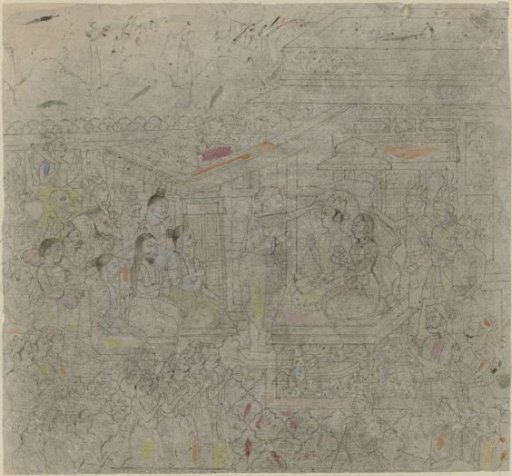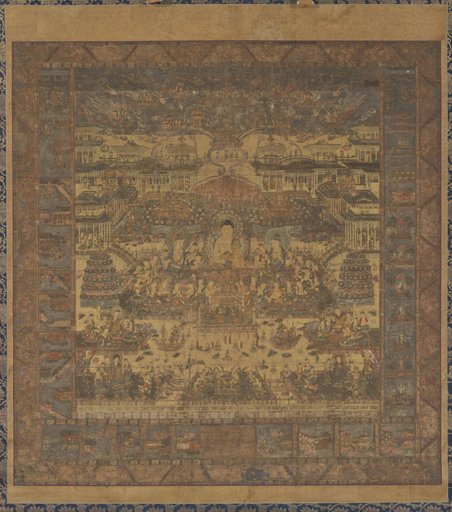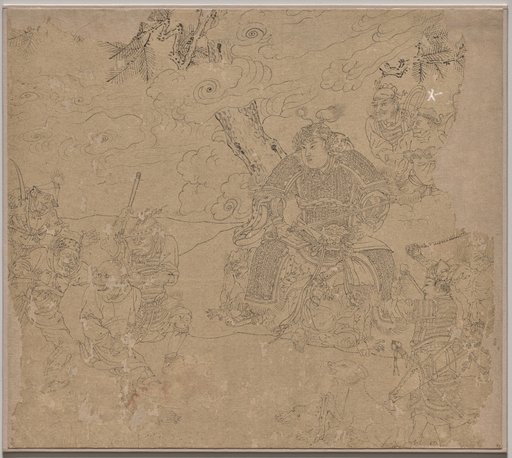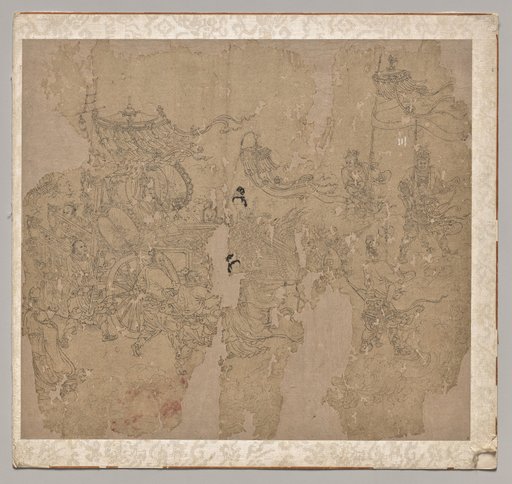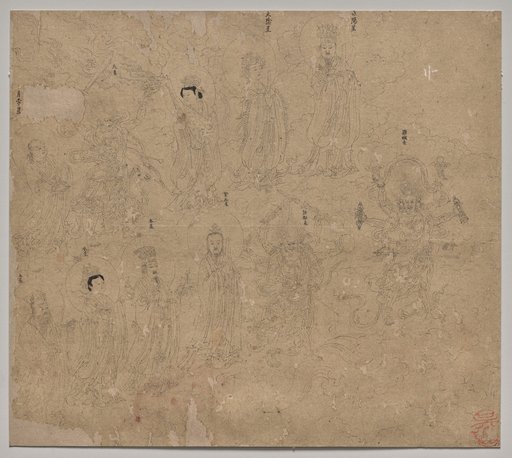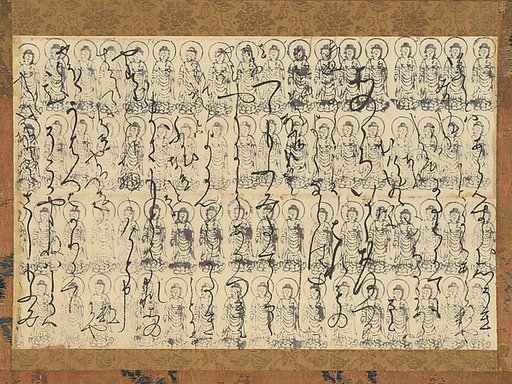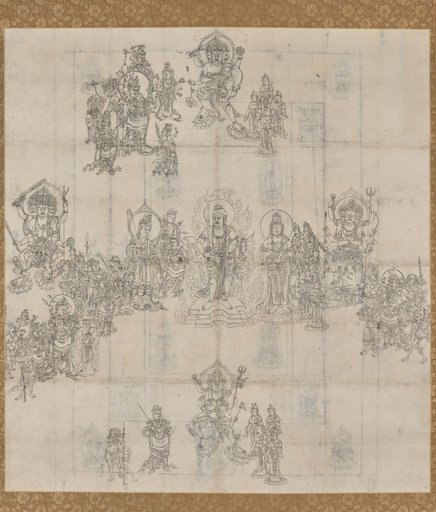
Iconographical Sketch (Zuzō) for the "Benevolent Kings Sutra Mandala"
From the collection of Cleveland Museum of Art. Free to download, adapt and use — no permission needed.
The Benevolent Kings Sutra has been a highly valued Buddhist scripture in Japan since the Nara period (710–794), when it started to be recited in a ceremony to pray for the peace and protection of the country. In the 800s, the monk Kūkai brought back from China a new translation of the text as well as Buddhist iconographic sketches to perform the rituals based on the sutra. Five scroll sets of copies of the original sketches brought by Kūkai are preserved in Daigoji and Tōji temples in Kyoto. This sketch, which has figural depictions of deities on the front and deities symbolized by objects on the back, differs in some ways from each of those sets, and represents an alternate approach to creating a mandala based on the Benevolent Kings Sutra .
Cleveland Museum of Art’s own description