CC0 · no rights reserved
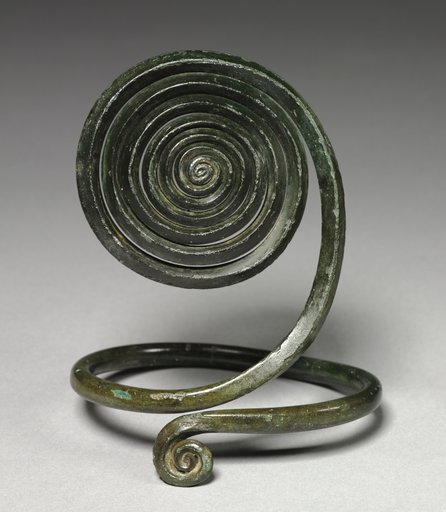
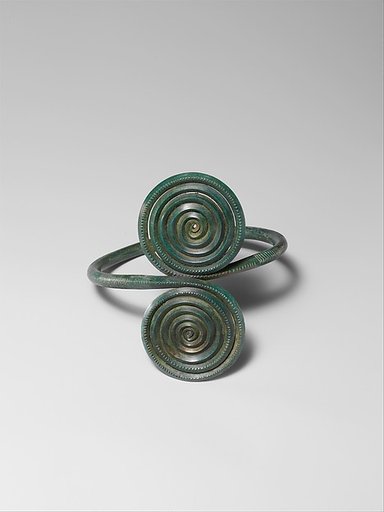
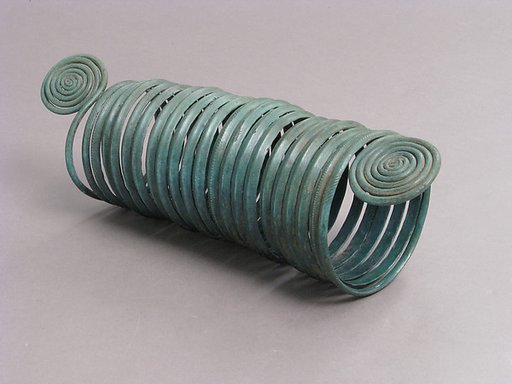
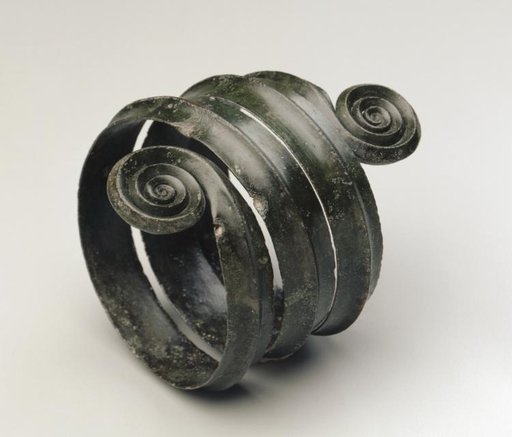
Turned Armilla
From the collection of Cleveland Museum of Art. Free to download, adapt and use — no permission needed.
About this work
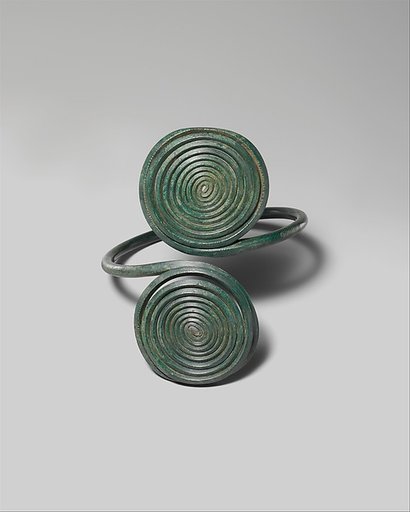
Europe. As the spiral mimics forms found in nature - specifically in nautilus shells - it is the basis for logarithmic measures of progression in measurement and growth, which in turn help establish the Fibonacci sequence. Through this sequence we can analyze the phenomenon of spiral designs, specifically in nautilus shells, where the radius of each new chamber grows at a rate determined by a specific proportion to the previous one.
Cleveland Museum of Art’s own descriptionCredit lineTurned Armilla, c. 1500 BCE. Hungary, Bronze Age. Bronze, wrought; overall: 12.5 x 10.4 cm (4 15/16 x 4 1/8 in.). The Cleveland Museum of Art, Purchase from the J. H. Wade Fund, 1988.5