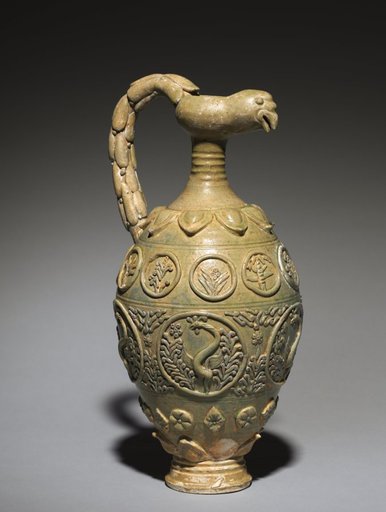
Bird-Headed Ewer
From the collection of Cleveland Museum of Art. Free to download, adapt and use — no permission needed.
With a lobed body, a bird-shaped head, and a birdfeather loop handle, this ewer is derived from West and Central Asian metalwork: Tang potters adopted foreign shapes (bird-headed ewer and amphora) and foreign motifs (floral medallions, vines, palmette, and roundel designs) with great freedom. The artistic expressions bespoke the confidence and spirit of the period. This work is a representation of northern celadon, although it is commonly believed that the northern kilns specialized in white wares and the southern kilns in green wares (notably, Yue celadon). It continues the tradition of celadon production in the north during the late Northern Dynasties period in the 500s.
Cleveland Museum of Art’s own description