CC0 · no rights reserved
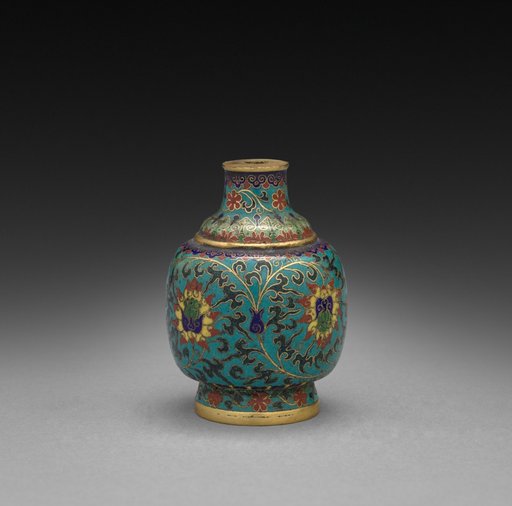
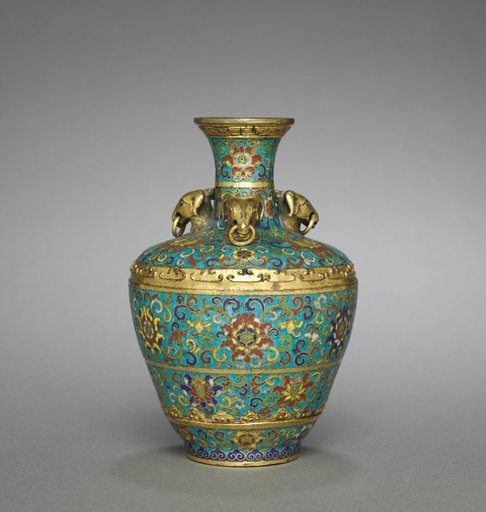
Vase with Three Rams' Heads
From the collection of Cleveland Museum of Art. Free to download, adapt and use — no permission needed.
About this work
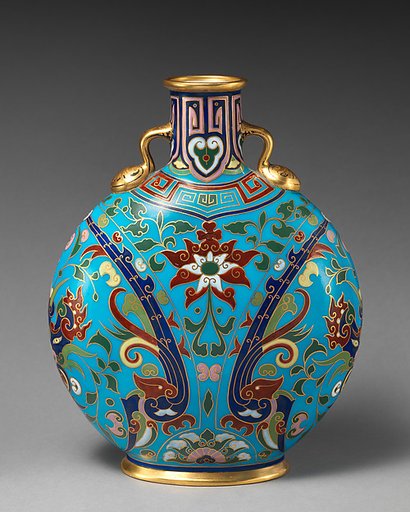
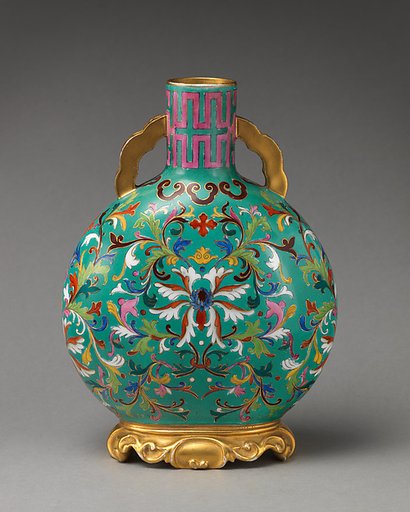
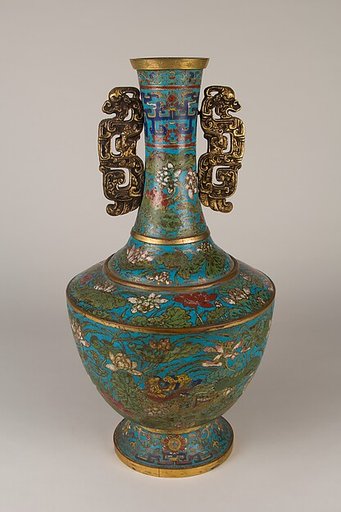
In cloisonné enameling, the decorative patterns are outlined by soldering metal wires (usually copper) to a metal base, creating a network of cells, or cloisons, to be filled with powdered enamels. After firing, the enamels are polished to create a smooth surface level with the cloisons. The exposed metal surfaces are gilt.
Cleveland Museum of Art’s own descriptionCredit lineVase with Three Rams' Heads, 1736–1795. China, Jiangxi province, Jingdezhen, Qing dynasty (1644-1911), Qianlong mark and reign (1736-1795). Cloisonné enamel; diameter: 9.4 cm (3 11/16 in.); overall: 14 cm (5 1/2 in.). The Cleveland Museum of Art, Bequest of Mrs. Severance A. Millikin, 1989.321