CC0 · no rights reserved
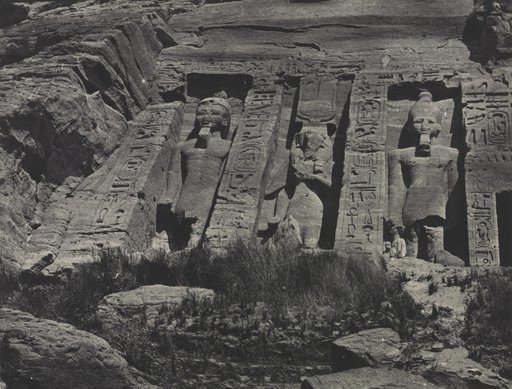
Southern Portion of the Rock-cut Temple of Hathor, Abu Simbel
From the collection of Cleveland Museum of Art. Free to download, adapt and use — no permission needed.
About this work
Du Camp was the first photographer to depict the marvels of ancient Egypt. In 1849 a scholarly association commissioned the young writer to document Egyptian monuments and their hieroglyphics. He learned to photograph shortly before embarking for Egypt in the company of the young novelist Gustave Flaubert. In 1852 Du Camp published an album of photographs of Egypt, Nubia, Palestine, and Syria, which brought him widespread recognition. Just as Du Camp followed in the footsteps of earlier painters and scholars, later photographers like Beato often echoed his choices of subject matter.
Cleveland Museum of Art’s own descriptionCredit lineÉgypte, Nubie, Palestine et Syrie. Dessins photographiques receuillis pendant les années 1849,1850 et 1851 accompagnes d'un text explicatif et précédés d'une introduction par Maxime Du Camp, pl. 10: Southern Portion of the Rock-cut Temple of Hathor, Abu Simbel, 1850. Maxime Du Camp (French, 1822–1894). Salted paper print from calotype negative, Blanquart-Évrard process; image: 16.5 x 21.5 cm (6 1/2 x 8 7/16 in.); paper: 29.5 x 37.5 cm (11 5/8 x 14 3/4 in.); matted: 40.6 x 50.8 cm (16 x 20 in.). The Cleveland Museum of Art, John L. Severance Fund, 1989.53
Similar works
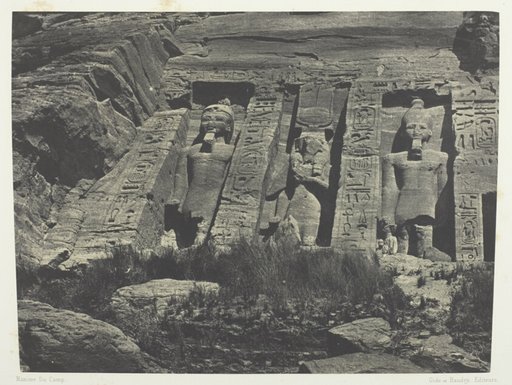 Ibsamboul, Partie Méridionale Du Spéos D'Hathor; Nubie, plate 110 from the album "Egypte, Nubie, Palestine et Syrie" (1852)
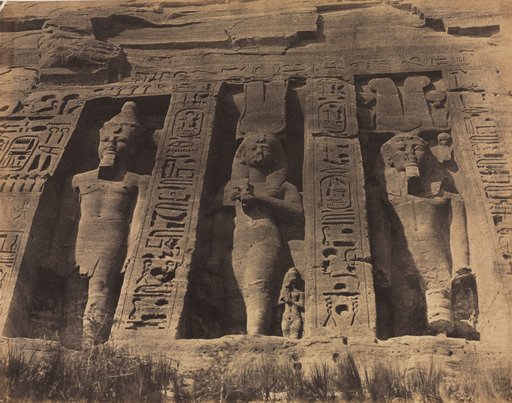 Temple of Abu Simbel
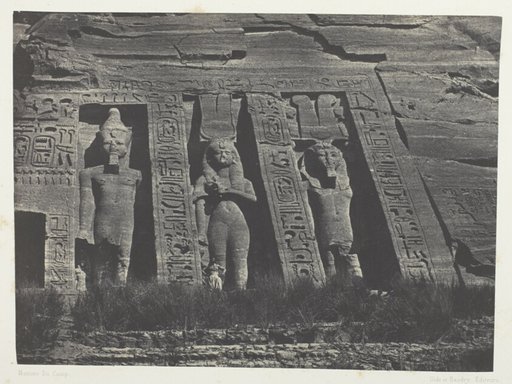 Ibsamboul, Partie Septentrionale Du Spéos D'Hathor; Nubie, plate 108 from the album "Egypte, Nubie, Palestine et Syrie" (1852)
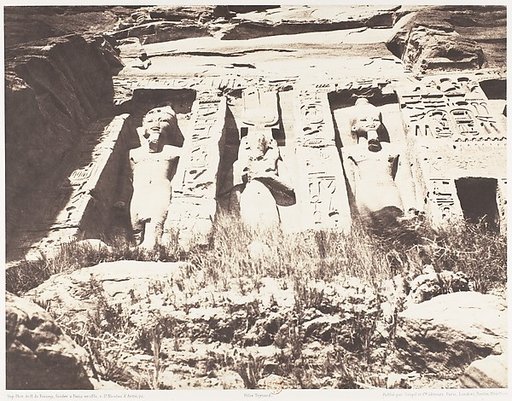 Abou-Sembil, Petit Spéos - Partie Gauche de la Façade
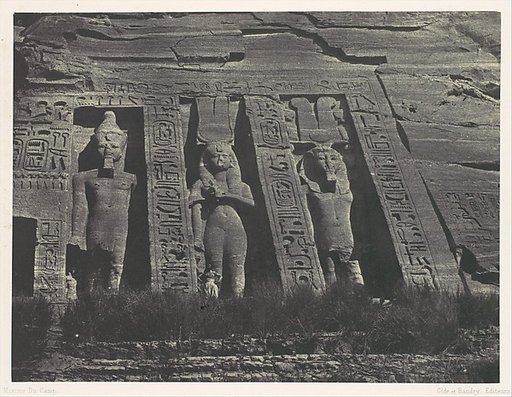 Nubie. Ibsamboul. Partie septentrionale du Spéos d'Hathor
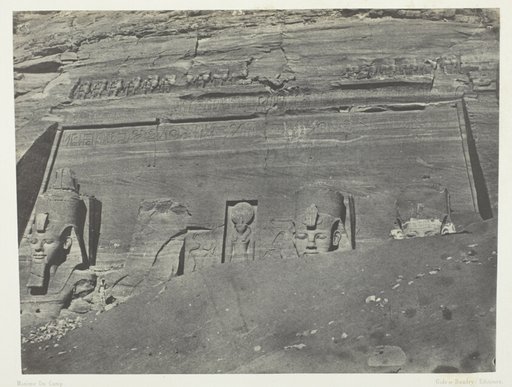 Ibsamboul, Vue Générale Du Grand Spéos De Phrè; Nubie, plate 102 from the album "Egypte, Nubie, Palestine et Syrie" (1852)