Totem Pole
From the collection of Cleveland Museum of Art. Free to download, adapt and use — no permission needed.
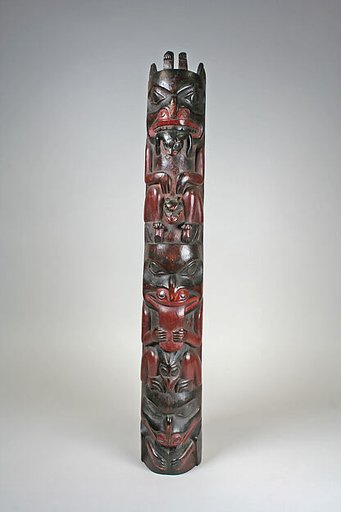
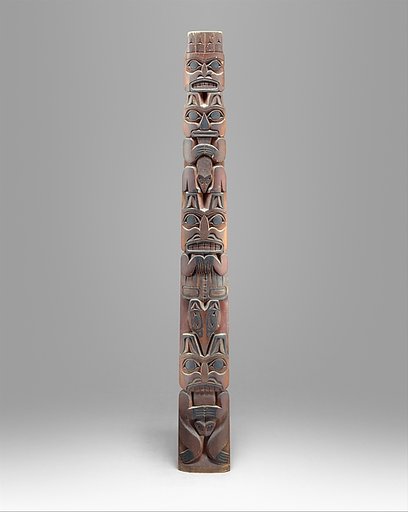
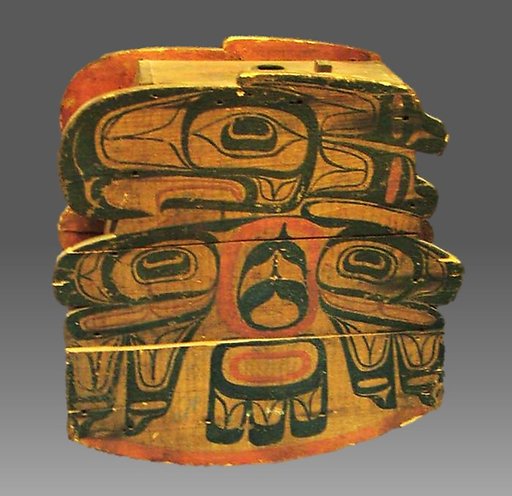
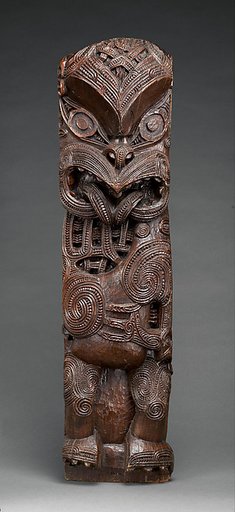
Native American villages of the Pacific Northwest were marked by great totem poles that proclaimed the rank and ancestry of their owners. This small model pole was once owned by a Tlingit storyteller, a member of the coho salmon clan, of the raven tribe. Because the pole has been stored indoors, its carving and bright, original colors are undamaged by the elements. Reportedly, this totem pole illustrates several stories. Kushda-Kaw, the land-otter, is the pole's lowermost figure; above him is his wife. The wife transforms herself into an owl (the third figure from the bottom) and flies into the trees to keep watch. Kushda-Kaw then lies in wait to frighten and harass unwary passers-by. Above the owl is a finback whale carrying a friend out to sea for fishing. Near the top of the pole is a whale with red lips who has swallowed his enemy, the raven. The tiny figure at the pole's summit is a spirit-woman, the raven's lover. She will cut the whale open to rescue him.
Cleveland Museum of Art’s own description