CC0 · no rights reserved
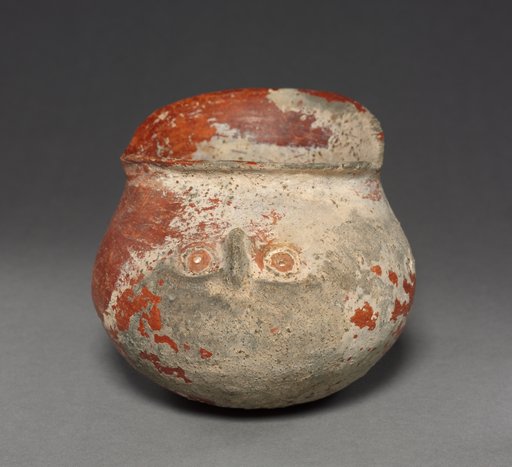
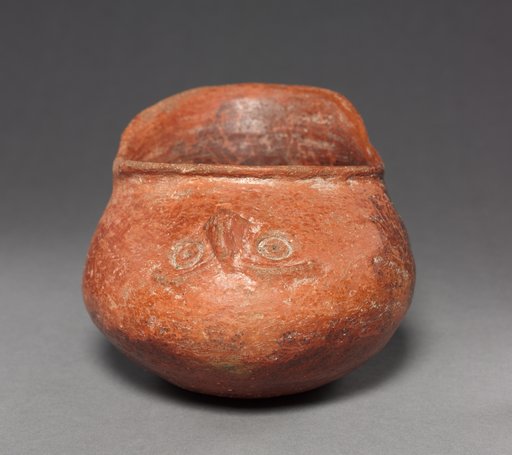
Head Effigy Bowl
From the collection of Cleveland Museum of Art. Free to download, adapt and use — no permission needed.
About this work
After about 200 BC, West Mexican chieftains gained in authority, their new status reflected in shaft tombs that shelter not only their remains but also lavish offerings, including sculptural ceramics. Many of the ceramics may refer to the crucial activities of a chief’s life, such as marriage, feasting, and war. The meaning of this unusual bowl—a head whose gaping mouth serves as the aperture—is unknown.
Cleveland Museum of Art’s own descriptionCredit lineHead Effigy Bowl, 100 BCE–300 CE. Mexico, Region of Tilantongo, District of Tlaxiaco, Nayarit style. Pottery; overall: 12.7 x 15.9 x 20.1 cm (5 x 6 1/4 x 7 15/16 in.). The Cleveland Museum of Art, Gift of Mr. and Mrs. James C. Gruener, 1990.200