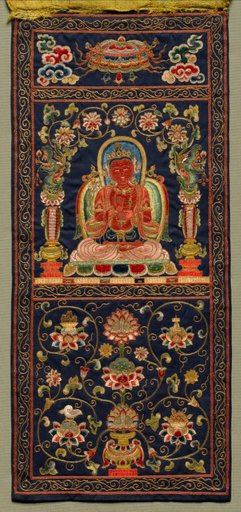
Thangka with the Seventh Bodhisattva
From the collection of Cleveland Museum of Art. Free to download, adapt and use — no permission needed.
In remarkably pristine condition, this embroidery is from a dispersed set that included images of protectors and bodhisattvas. The embroidery technique and pictorial style are Chinese, but the subject matter and the type of devotional hanging called a thangka are associated with Tibetan Buddhism. Historical records state that during the early Ming dynasty (1368–1644), gifts of Buddhist art were sent from China to Tibet, since relationships between Chinese rulers and Tibetan monastic patriarchs were strong and amicable during this time. A Tibetan inscription on the back notes that this figure is the “seventh bodhisattva,” indicating the position in which it would have hung in a temple hall. Odd-numbered works were hung on one side of the main image, and even-numbered works on the other, counting from the center.
Cleveland Museum of Art’s own descriptionSimilar works
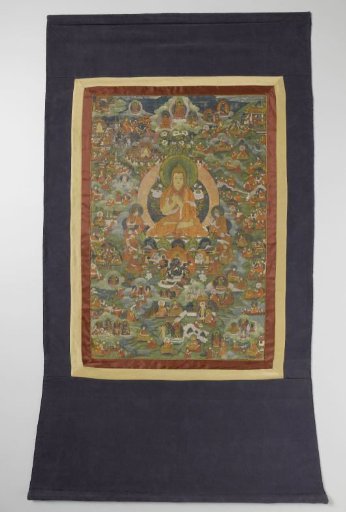 Thangka, central figure Tsong-kha-pa
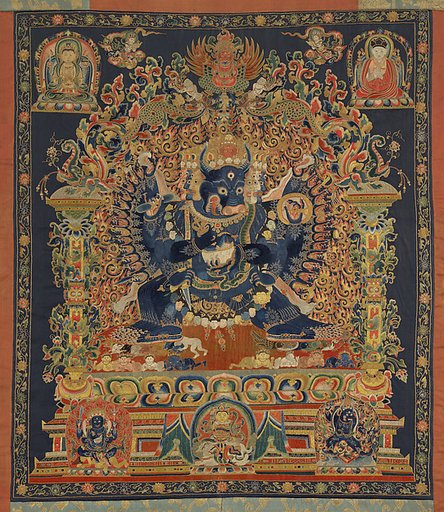 The Deity Vajrabhairava, Tantric Form of the Bodhisattva Manjushri
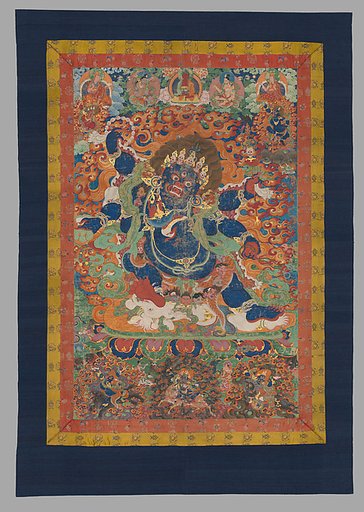 The Wrathful Protector Mahakala, Tantric Protective Form of Avalokiteshvara
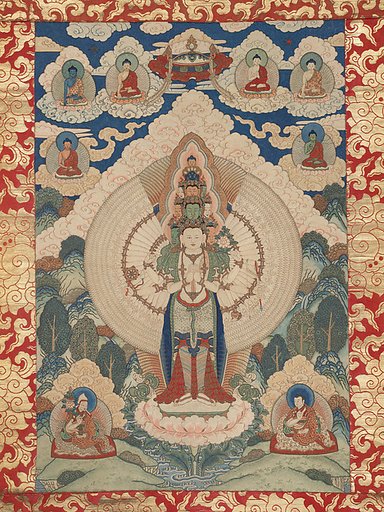 Eleven-headed bodhisattva Guanyin
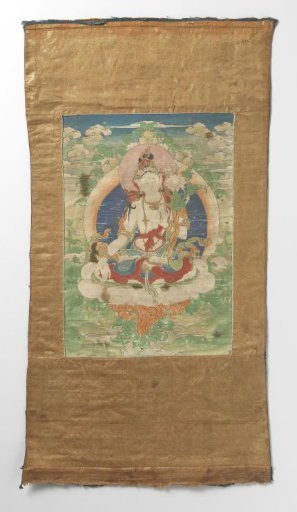 Tangka with a Depiction of the White Tara
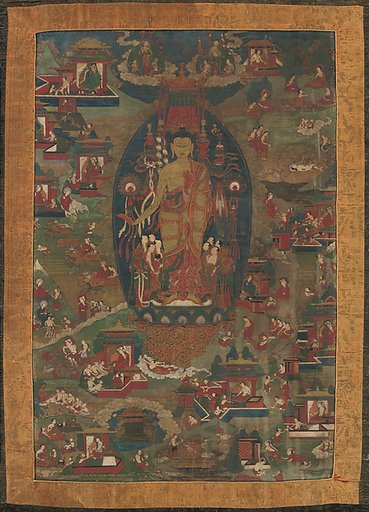 Buddha Shakyamuni and Scenes of His Previous Lives (Jataka Tales)