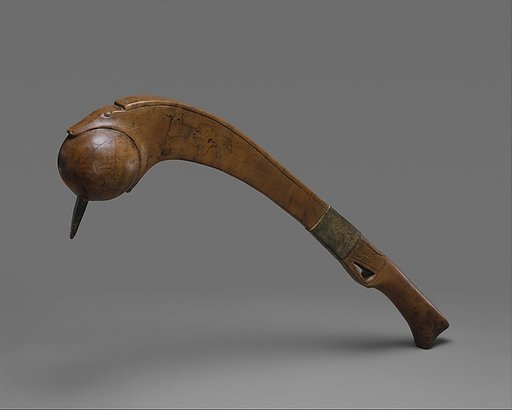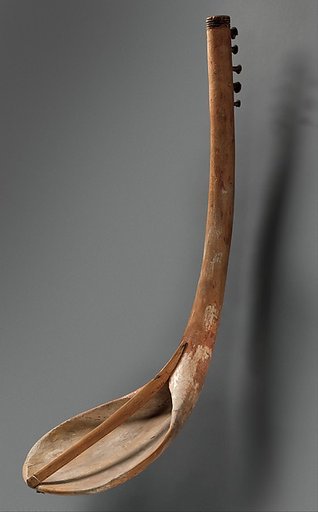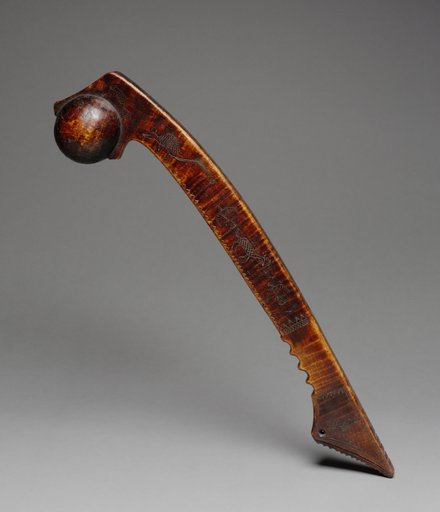
Ball-Headed War Club
From the collection of Cleveland Museum of Art. Free to download, adapt and use — no permission needed.
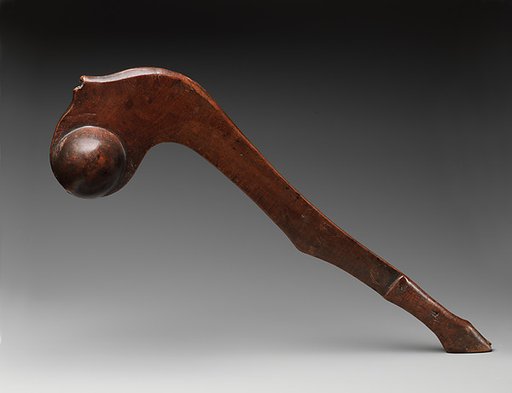
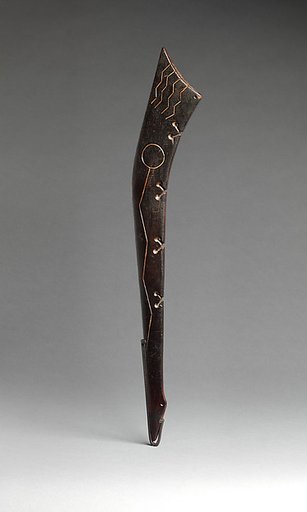
The ball at the striking end of this club is clenched in an abstract, jawlike form that likely refers to a protector animal who endowed the owner with power. Incised on the shaft is a rich record of doodemag (singular, doodem, “totem”)—animals representing other-than-human progenitors from which Anishinaabe peoples trace their descent. (The Anishinaabeg, a group of related Great Lakes nations, include the Odawa, Ojibwe, Potawatomi, and others.) Included is an antlered creature, perhaps a caribou, along with mammals, birds, and powerful spirit beings: the thunderbird, its wings outstretched, and perhaps the long-tailed underwater panther. When this example was made, clubs had become symbols of status and earlier ways of life, having been replaced as favored weapons by metal tomahawks and European firearms. Today, clubs are part of powwow regalia.
Cleveland Museum of Art’s own description