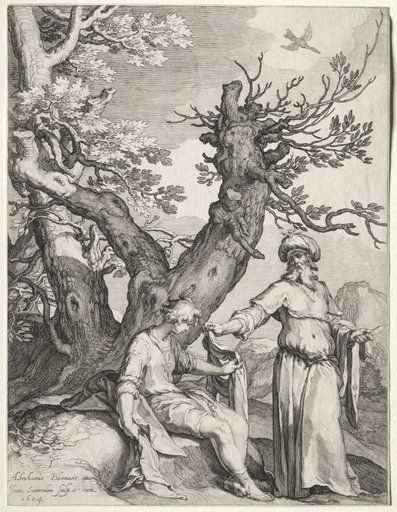
Ahijah and Jeroboam
From the collection of Cleveland Museum of Art. Free to download, adapt and use — no permission needed.
These four prints were likely meant as two pairs of engravings depicting scenes of the lives of the prophets Ahijah and Elijah. Although Elijah was a common subject for artists, works featuring Ahijah were extremely rare. Other than their common source, the Book of Kings from the Bible, they have no thematic link. The action in this print shows the prophet Ahijah giving the young Jeroboam-a rebel leader set against the idol-worshipping King Solomon-ten portions of his own new mantle. This symbolic gesture predicts Jeroboam's rise to power as king of the ten tribes of Israel. Abraham Bloemaert (1566-1651) was the leading painter in Utrecht, where he enjoyed a long and prolific career. Coming to maturity at the height of Mannerism, his influential designs were widely disseminated through prints and drawings. Although he worked closely with printmakers like Jan Saenredam and Jacob Matham, he did not make prints himself, with the possible exception of one etching.
Cleveland Museum of Art’s own descriptionSimilar works
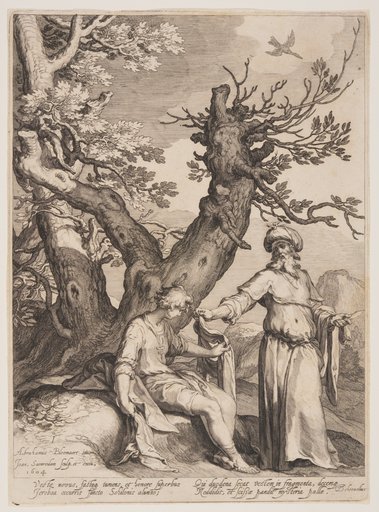 Ahajah Divides his Cloak into Twelve Parts, from Four Scenes from the Life of the Prophets, Isaiah, Ahajah and Elisha
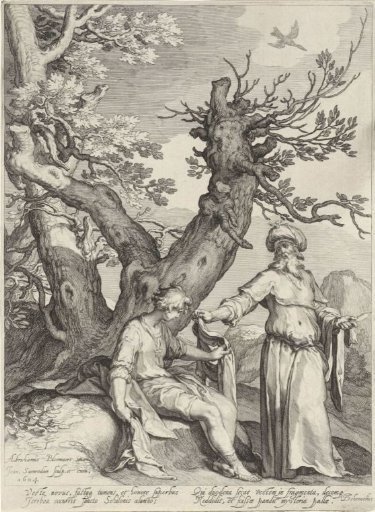 Ahijah Divides His Robe into Twelve Pieces and Gives Ten to Jeroboam
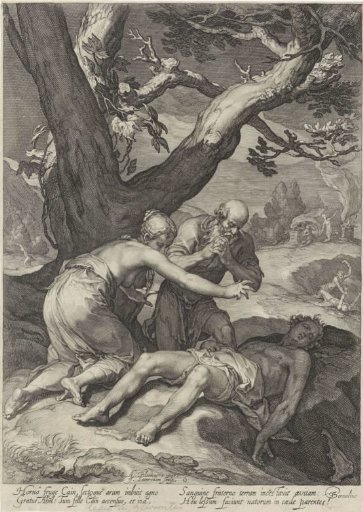 Adam and Eve Mourn the Death of Abel
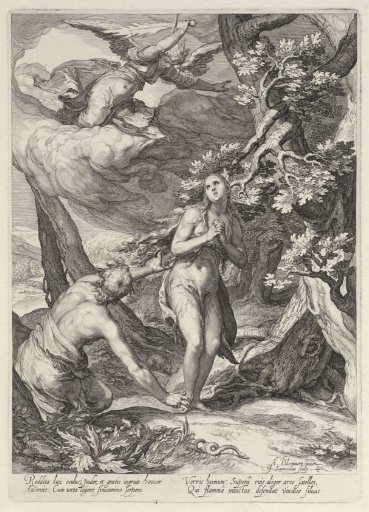 Expulsion from Paradise
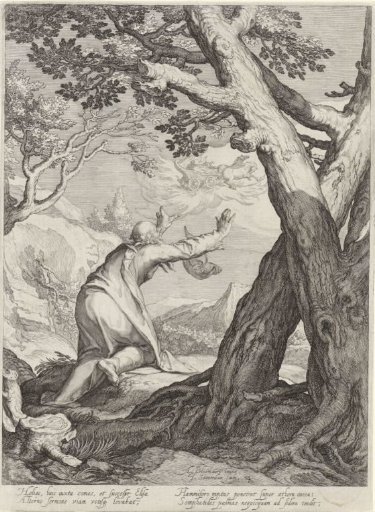 Elijah Departs the World in a Chariot of Fire and Leaves His Mantle for Elisha
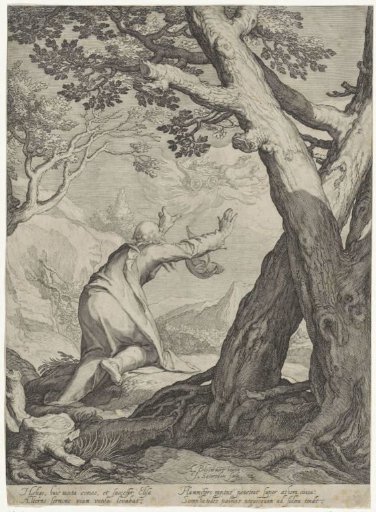 Elijah Departs the World in a Chariot of Fire and Leaves His Mantle for Elisha