CC0 · no rights reserved
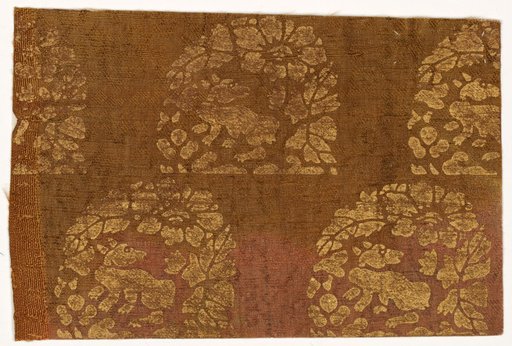
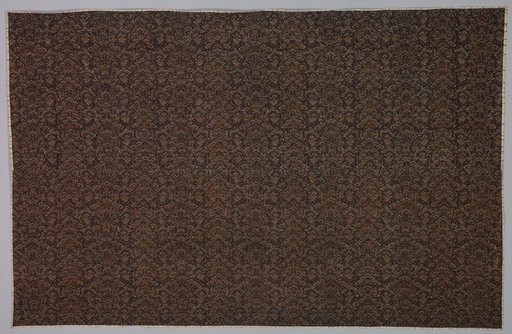
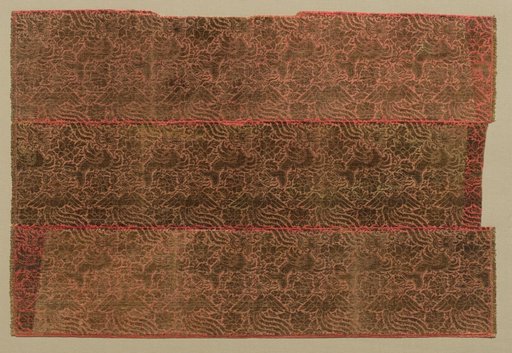
Makaras, Phoenixes and Flowers
From the collection of Cleveland Museum of Art. Free to download, adapt and use — no permission needed.
About this work
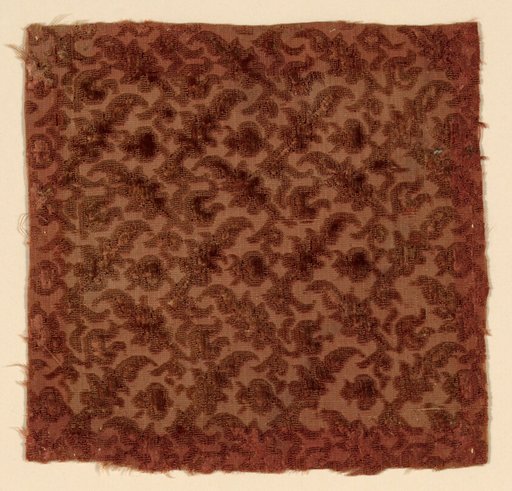
Central Asian designers drew from a wide variety of motifs, both imaginary and real. In this silk, rows of soaring phoenixes alternate with rows of makaras. Combining a fish body and tail, wings, and a dragon's head, the makara originated in India as a water creature. With the spread of Buddhism, the motif migrated into the art of Central Asia and, from there, into the art of northern China. In Italy, exotic Central Asian patterns such as this inspired flights of imagination. One such example (seen in the photograph below) shows a creature, strikingly similar to the makara, spewing forth a dragon while a dog walks up its back.
Cleveland Museum of Art’s own descriptionCredit lineMakaras, Phoenixes and Flowers, 1200s. Central Asia or Daidu, 13th century. Lampas, silk and gold thread; overall: 51.3 x 75.6 cm (20 3/16 x 29 3/4 in.). The Cleveland Museum of Art, Purchase from the J. H. Wade Fund, 1991.5