Articles of Glass
From the collection of Cleveland Museum of Art. Free to download, adapt and use — no permission needed.
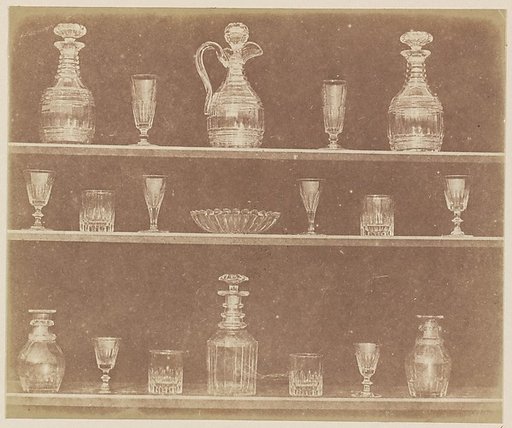
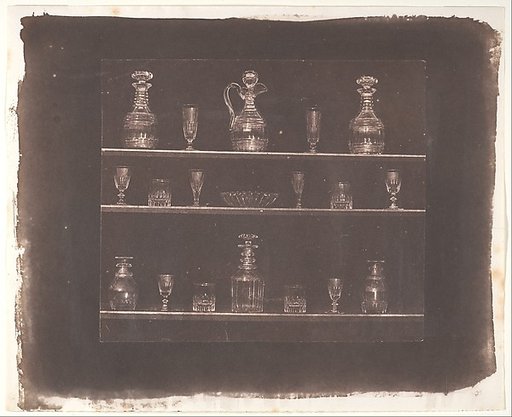
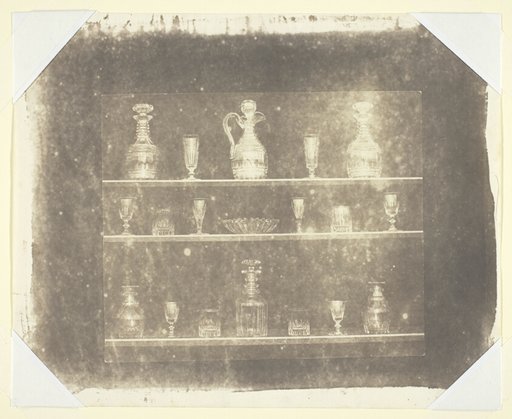
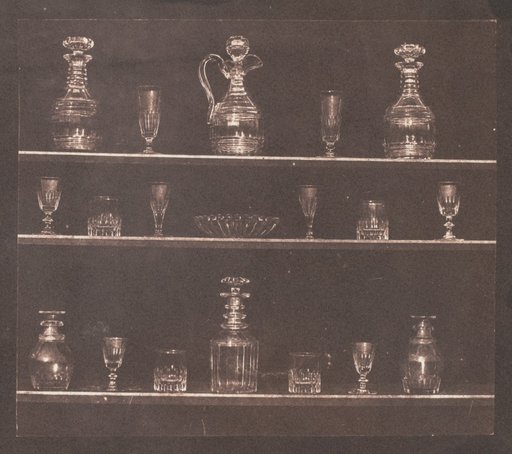
Pursuing such diverse interests as language, mathematics, botany, and optics, William Henry Fox Talbot was a prominent scholar and scientist. In 1839 he invented the first system of positive and negative photography—the calotype process. The basis of all modern photography, the calotype's paper negative made possible the infinite reproduction of prints from a single negative. In Articles of Glass , three rows of sparkling glass objects are isolated against a dark background, illustrating the new medium's ability to capture the nuances of light and record reality. A remarkable technical and aesthetic achievement, the image testifies to Talbot's artistry and classical sensibilities, expressed through his use of symmetry and a central focus. This image was included in Talbot's The Pencil of Nature (1844), one of the first books illustrated with actual photographic prints.
Cleveland Museum of Art’s own description