CC0 · no rights reserved
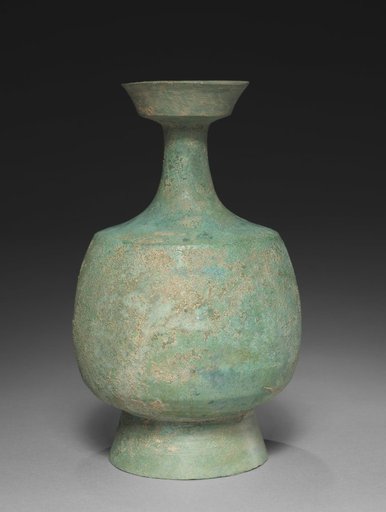
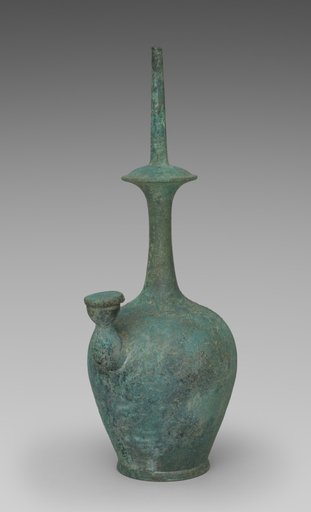
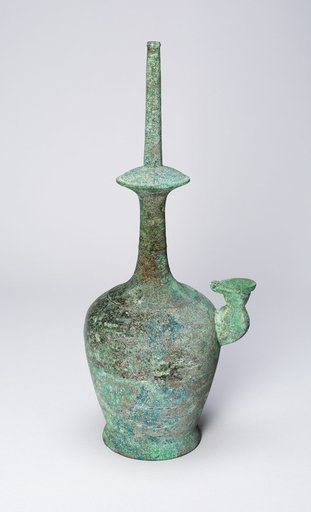
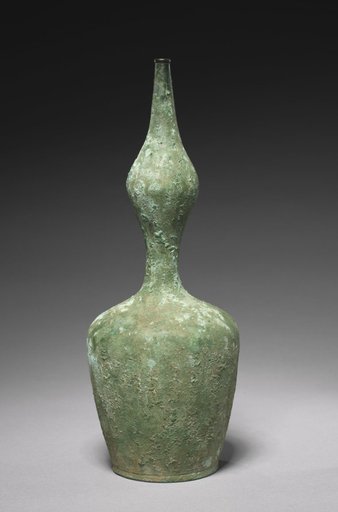
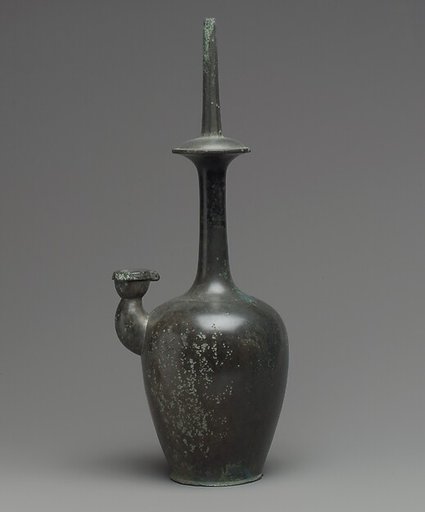
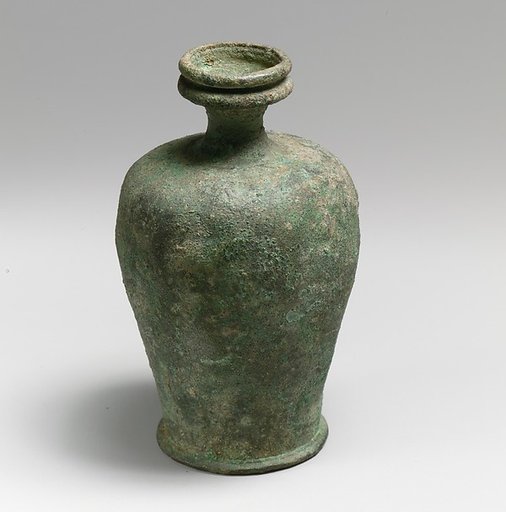
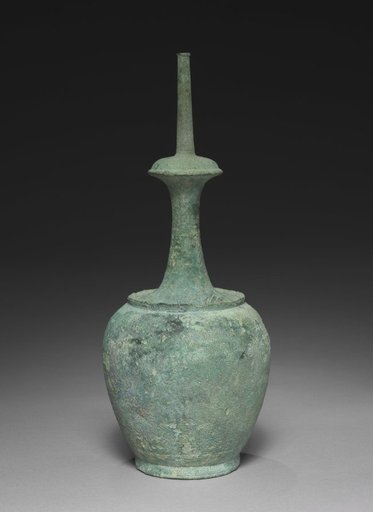
Water Ewer for Rituals (Kundika)
From the collection of Cleveland Museum of Art. Free to download, adapt and use — no permission needed.
About this work
Known as kundika in Sanskrit, this distinctively shaped vessel served to purify a sacred space and to invoke a deity. In Korean Buddhist art, it appears primarily as an attribute of the Bodhisattva Avalokitesvara (Gwaneum in Korean). By the 12th century, however, it came to serve as aristocrats’ fancy water container for everyday use.
Cleveland Museum of Art’s own descriptionCredit lineWater Ewer for Rituals (Kundika) (청동 정병 [靑銅淨甁]), 1100s. Korea, Goryeo dynasty (918–1392). Bronze; outer diameter: 13.7 cm (5 3/8 in.); overall: 33 cm (13 in.). The Cleveland Museum of Art, Seventy-fifth anniversary gift of Robert Moore, 1992.141