CC0 · no rights reserved
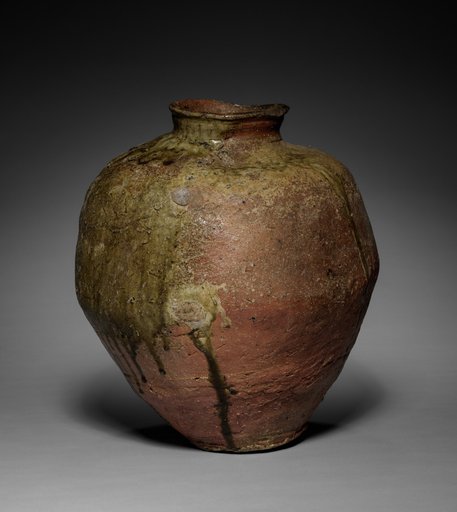
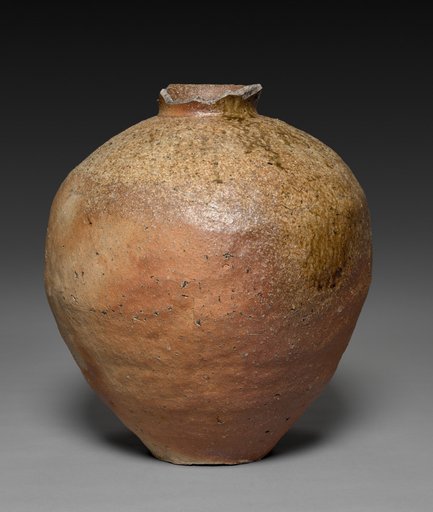
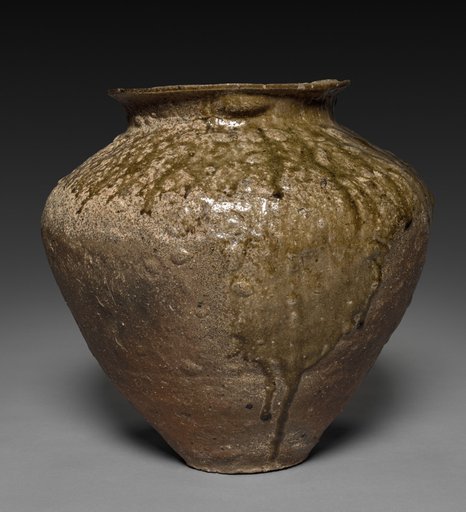
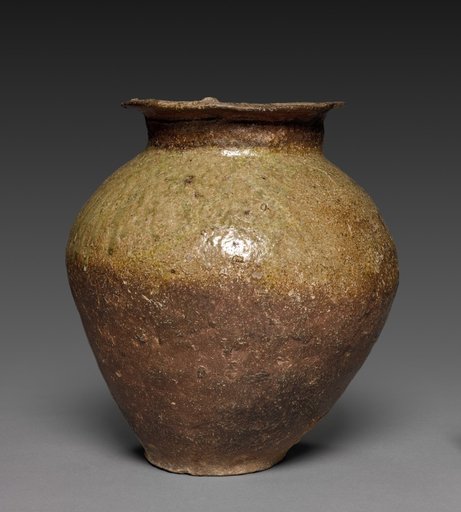
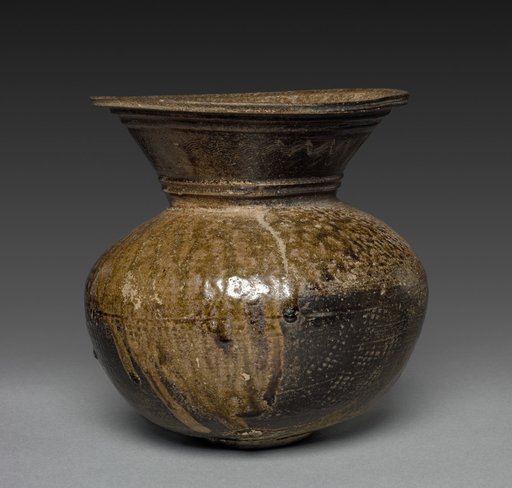
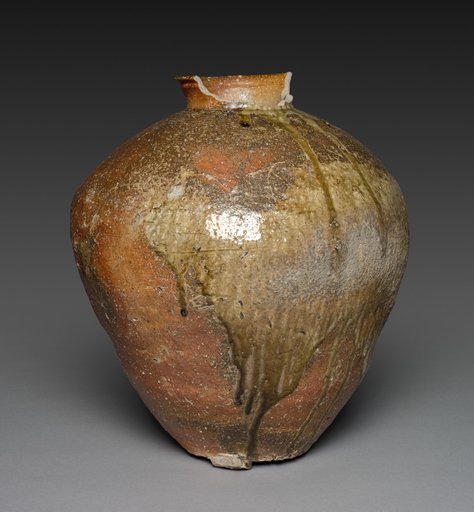
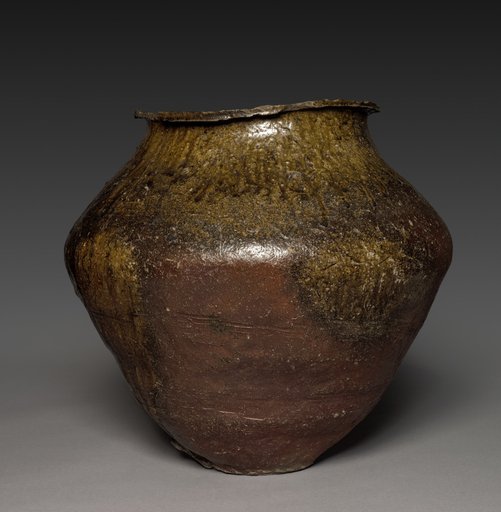
Storage Jar
From the collection of Cleveland Museum of Art. Free to download, adapt and use — no permission needed.
About this work
This storage jar was made by piling coils of clay atop one another, smoothing the inner and outer surfaces, and allowing the clay to dry before adding another section of the form. The wide rim and mouth were then added using a potter’s wheel. Because of its small base, the vessel could stand safely on a narrow step on the steep slope of a rising kiln floor. Such kilns were built into the side of a hill and used wood for firing. The natural ash glazes took about a week to 10 days to form.
Cleveland Museum of Art’s own descriptionCredit lineStorage Jar, 1350–99. Japan, Nanbokuchō period (1336–92). Stoneware with natural ash glaze and impressed designs (Tokoname ware); diameter: 55.3 cm (21 3/4 in.); overall: 51 cm (20 1/16 in.). The Cleveland Museum of Art, Gift of George Gund, 1992.356