CC0 · no rights reserved
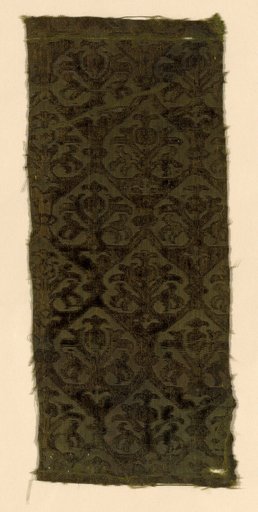
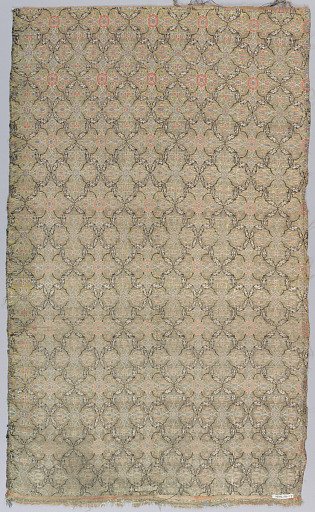
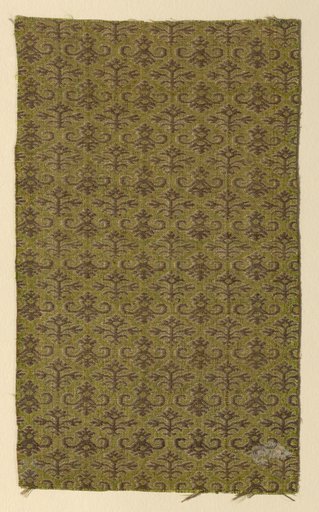
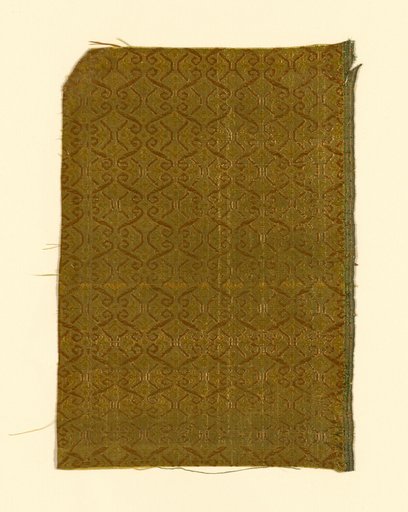
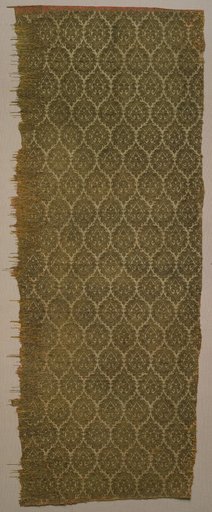
Textile with Palmettes
From the collection of Cleveland Museum of Art. Free to download, adapt and use — no permission needed.
About this work
Designs of repeated ogives were popular in Central Asia and survive in a number of variations. Usually, the ogival frame encloses a floral motif, as in this example. Sometimes paired animals occur instead. Silks with this type of pattern were exported to Western Asia and to Europe, where they inspired textile designs woven locally. Mongol silks with exotic floral and animal patterns were acquired for use as clothing and furnishings by the clergy and nobility. They were also used by painters as models for hangings or garments.
Cleveland Museum of Art’s own descriptionCredit lineTextile with Palmettes, 1200s–1300s. Central Asia, Il-khanid (Mongol) period. Silk and gold thread; tabby with supplementary weft; overall: 85.5 x 35 cm (33 11/16 x 13 3/4 in.); mounted: 106.7 x 50.8 cm (42 x 20 in.). The Cleveland Museum of Art, John L. Severance Fund, 1993.253