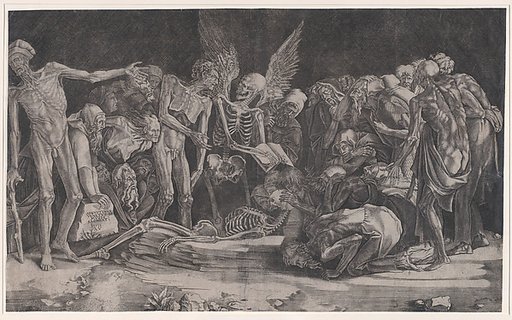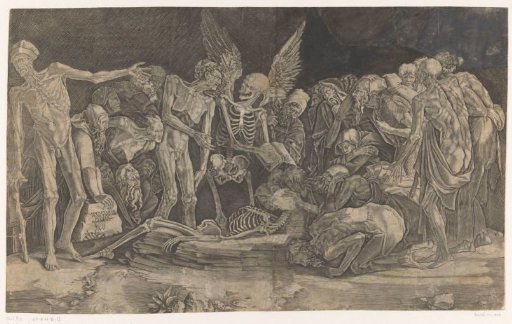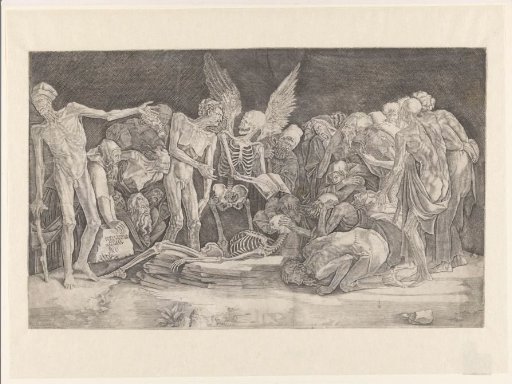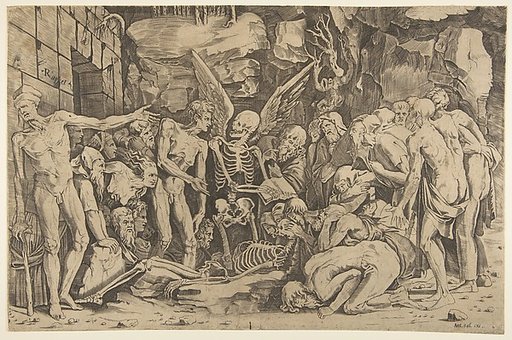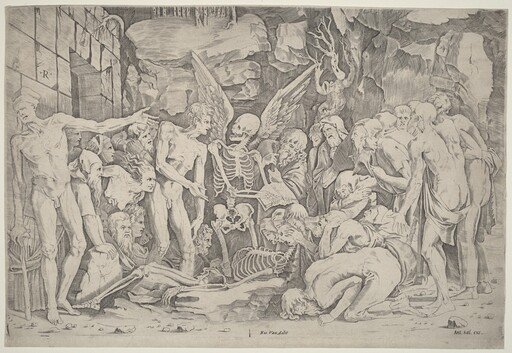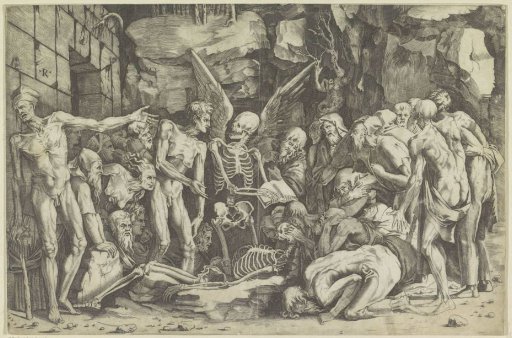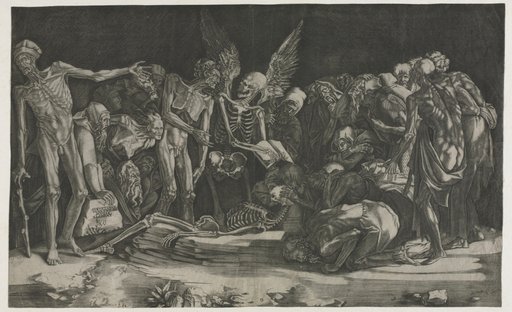
Skeletons, also known as Allegory of Death and Fame
From the collection of Cleveland Museum of Art. Free to download, adapt and use — no permission needed.
Although for centuries scholars have attempted to understand the allegorical meaning of this print, 16th-century artist and author Giorgio Vasari described it simply as “an anatomy of desiccated nudes and of bones of the dead.” A central figure of winged Death stands over an interred skeleton, surrounded by a variety of skeletal and living human figures who appear to debate the fate of the soul. At far left is a “marasmic” man, a type of sun-dried body used by anatomists to study the muscles without removing the skin. Rosso Fiorentino, who designed the composition of this print to be engraved by Agostino Veneziano, was a Florentine contemporary of Michelangelo who planned a book on anatomy that was never published.
Cleveland Museum of Art’s own description