CC0 · no rights reserved
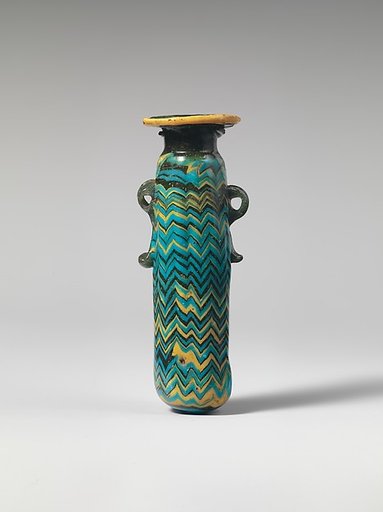
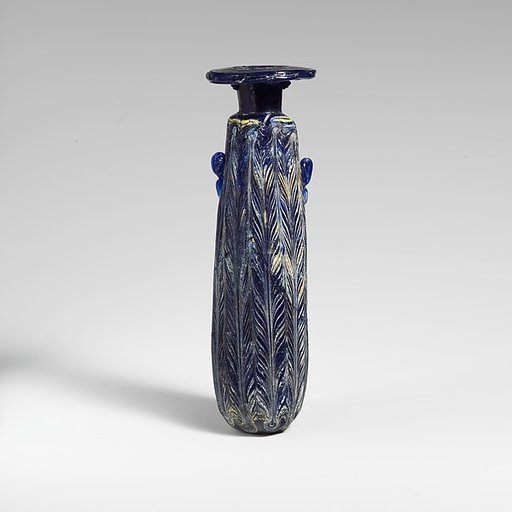
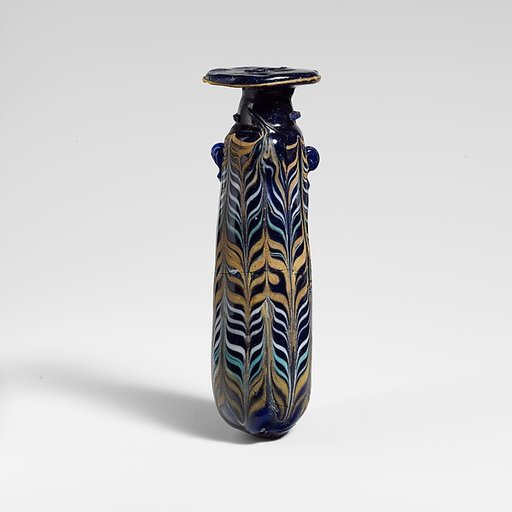
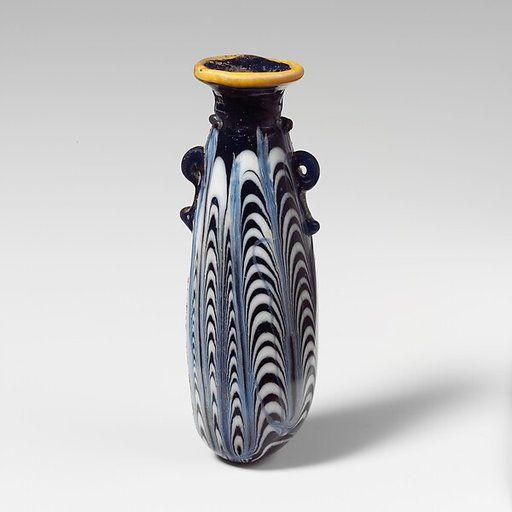
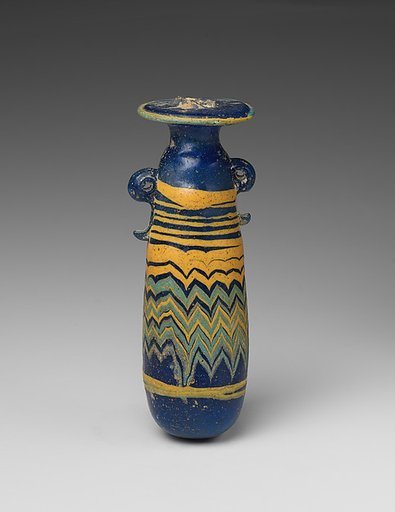
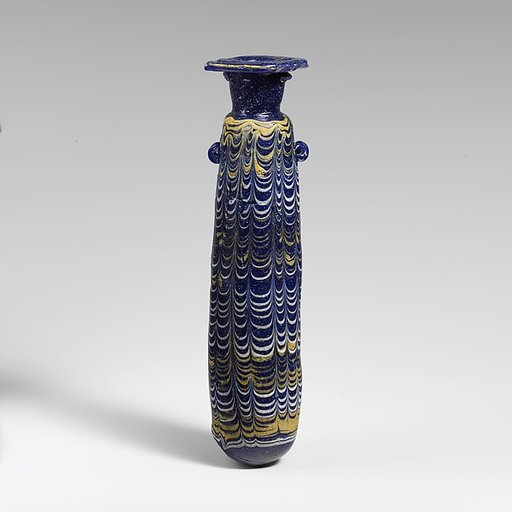
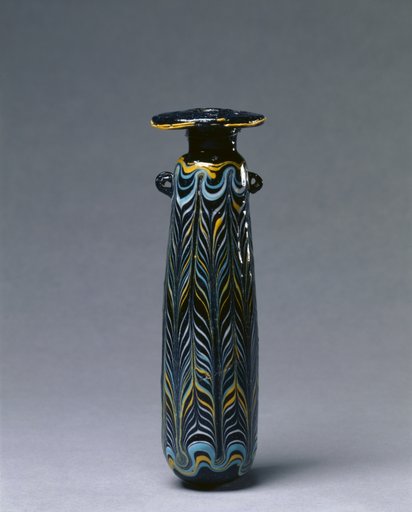
Perfume Bottle (Alabastron)
From the collection of Cleveland Museum of Art. Free to download, adapt and use — no permission needed.
About this work
Before glassblowing was invented in about 50 BC, glass bottles were formed by winding molten glass around a mud or dung core much the way cotton candy is wrapped around a paper cone. Later, the core was scraped out leaving a hollow bottle to be filled with expensive perfumes or scented oils.
Cleveland Museum of Art’s own descriptionCredit linePerfume Bottle (Alabastron), c. 325–275 BCE. Italy or Eastern Mediterranean, Etruscan. Glass; diameter: 5.1 cm (2 in.); overall: 16.5 cm (6 1/2 in.). The Cleveland Museum of Art, Purchase from the J. H. Wade Fund, 1994.9