CC0 · no rights reserved
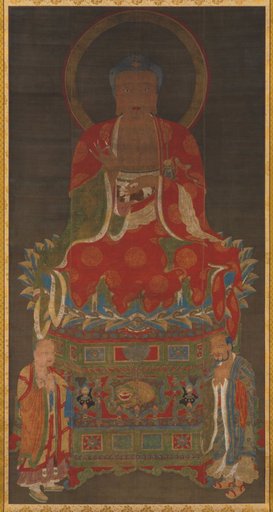
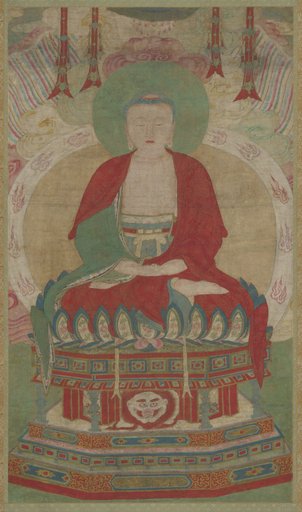
Seated Amitābha
From the collection of Cleveland Museum of Art. Free to download, adapt and use — no permission needed.
About this work
This magnificent Buddha, called Amitābha (literally, “infinite light”) is seated on a lotus pedestal with both palms facing up over crossed legs, suggesting that it is in deep meditation. In contrast to the richly ornamented throne on which the Buddha is seated, the figure itself is devoid of any jewelry or decorative attributes, emphasizing its enlightened status and detachment from worldly affairs. The lion head in the center of the pedestal is a motif from Central Asia, which can also be seen in the halo or nimbus of Chinese Buddhist stone steles.
Cleveland Museum of Art’s own descriptionCredit lineSeated Amitābha (阿彌陀佛), late 1500s–early 1600s. Chinese, Ming dynasty (1368-1644). Hanging scroll; ink and color on silk; overall with knobs: 236.9 x 105.7 cm (93 1/4 x 41 5/8 in.); painting only: 130.8 x 75 cm (51 1/2 x 29 1/2 in.). The Cleveland Museum of Art, Gift of David S. Utterberg and the Severance and Greta Millikin Purchase Fund, 1994.94