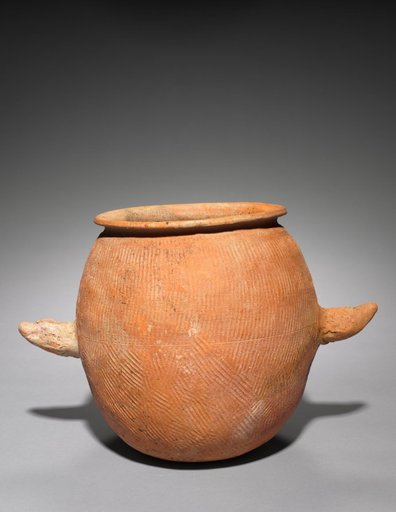
Jar with Horn-Shaped Handles
From the collection of Cleveland Museum of Art. Free to download, adapt and use — no permission needed.
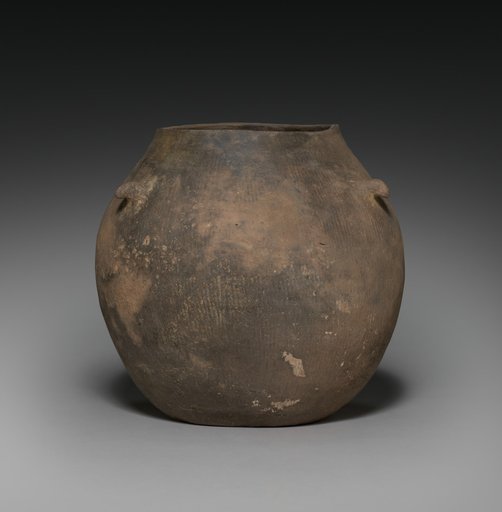
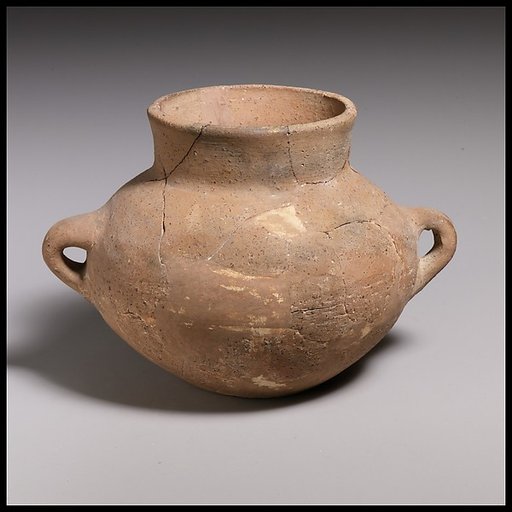
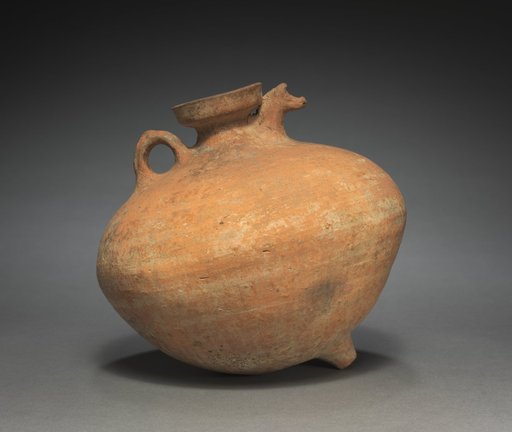
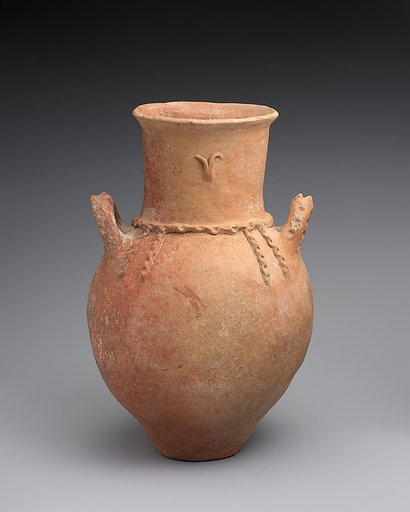
Although the function of this earthenware vessel remains unknown, its low-fired red surface indicates the various steps in its fabrication. First, coils of clay were layered on top of one another and pinched together to form the wall of the pot. Then wood mallets with carved surfaces pounded these walls simultaneously, inside and out, merging and thinning the clay bands. Thus the impressed designs visible on both the inner and outer surfaces were functional as well as decorative. A single incised line courses across the body wall of impressed patterns, linking the two "horns." Each of these is pierced to allow a uniform firing of the entire vessel. The function of the "horn" handles remains unknown. The smooth, finished surfaces of the short neck and thick, rounded mouth of the vessel indicate the use of a potter's wheel to complete the form. This rare vessel probably comes from the southwestern region of the Korean peninsula.
Cleveland Museum of Art’s own description