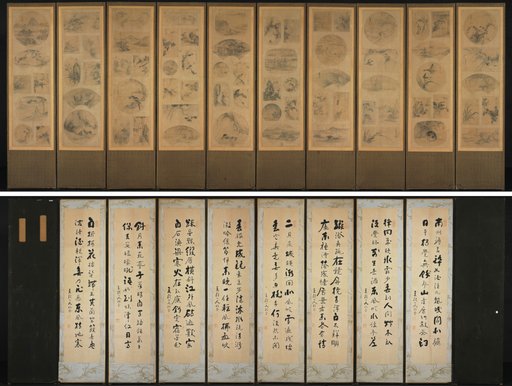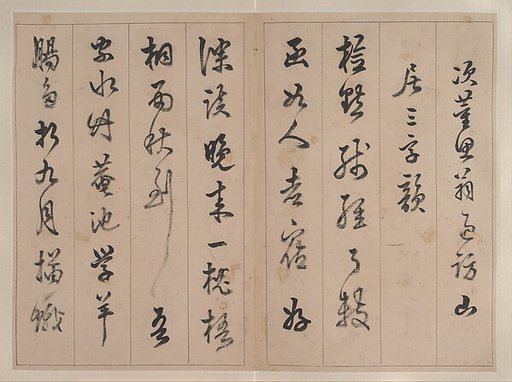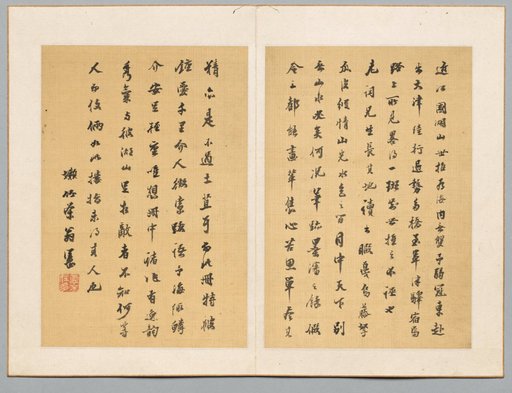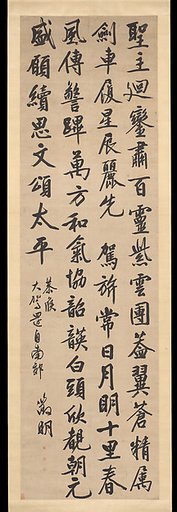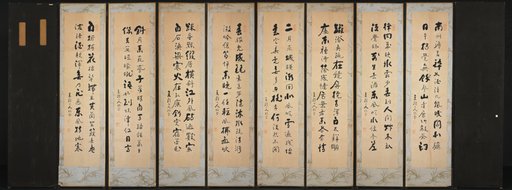
Calligraphy (reverse)
From the collection of Cleveland Museum of Art. Free to download, adapt and use — no permission needed.
The front of this screen features an assortment of subjects: birds and flowers, landscapes, and scenes of everyday life, mostly in monochromatic ink with light colors. The screen’s reverse side conveys a number of classical poems about the fleeting beauty of the four seasons. Traditionally, only one side of a folding screen bears painted or embroidered images, since these were used as a background furnishing. In Korean houses by the 1800s and early 1900s, however, two-sided folding screens became noticeably popular, possibly inspired by Japanese double-sided folding screens, which mainly served as room dividers in Japanese households.
Cleveland Museum of Art’s own description