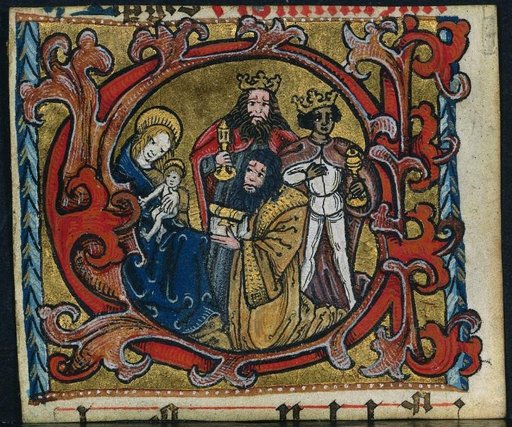
Three Cuttings from a Missal: Initial C with the Adoration of the Magi
From the collection of Cleveland Museum of Art. Free to download, adapt and use — no permission needed.
These three cuttings are illuminated in a style that is somewhat provincial and difficult to localize. The figures relate to late 15th-century German woodcut illustration, but also vaguely recall Franconian sculpture and Saxon painting. The figures are simply, though charmingly, sketched in heavy black ink with little attention to finesse of line or detail. The palette is confined to dark hues of red, blue, and ochre with flesh tones either left white or colored pink. The style hints at an origin in Franconia, Saxony, or Silesia. The initial E includes a form of musical notation called Hufnagalshrift or "horseshoe nail writing" because it resembles the nails used to attached horseshoes. Hufnagalshrift appears almost exclusively in manuscripts produced in Germanic Central Europe. The use of different colored lines in the musical stave is a known feature of Saxony. The text Exultet iam angelica (Rejoice now angel) begins the prayer used only on Holy Saturday during the Easter Vigil. It was sung by the priest at Mass to a very special and ancient melody.
Cleveland Museum of Art’s own descriptionSimilar works
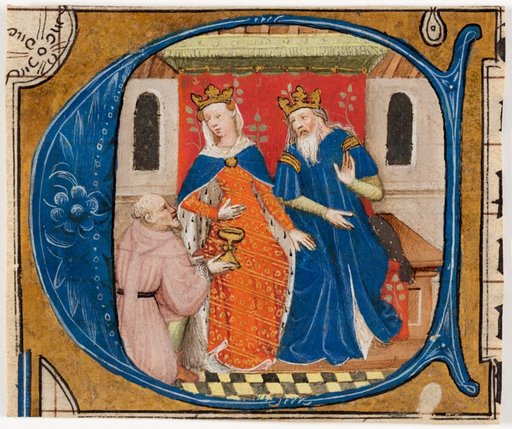 Nehemiah before King Artaxerxes, initial ‘C’ from a Bible
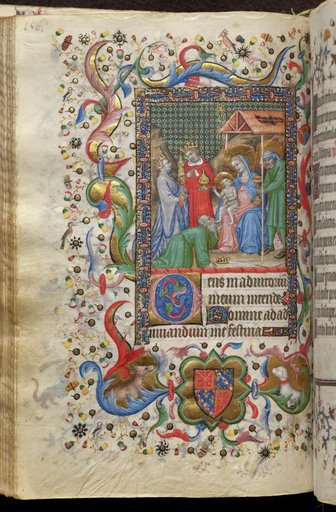 Hours of Charles the Noble, King of Navarre (1361-1425): fol. 78v, Adoration of the Magi (Sext)
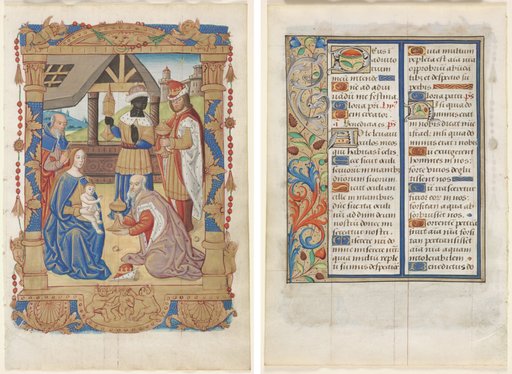 Leaf from a Book of Hours: Adoration of the Magi (recto) and Text with Illustrated Border (verso) (3 of 3 Excised Leaves)
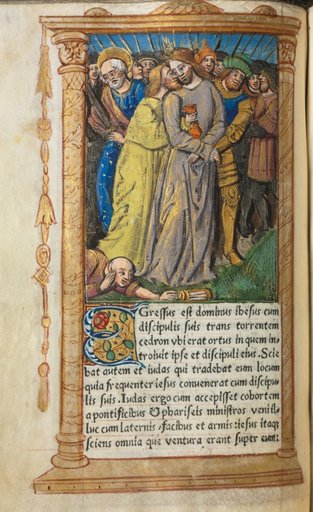 Printed Book of Hours (Use of Rome): fol 20v, Christ in Gethsemane
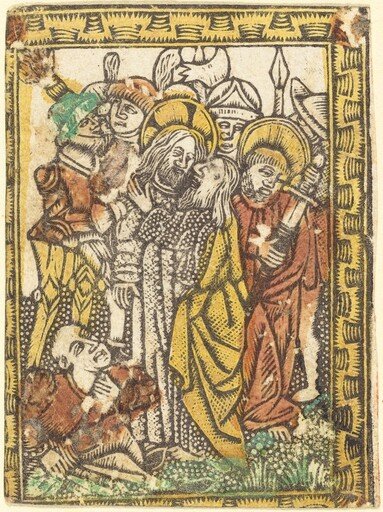 The Betrayal
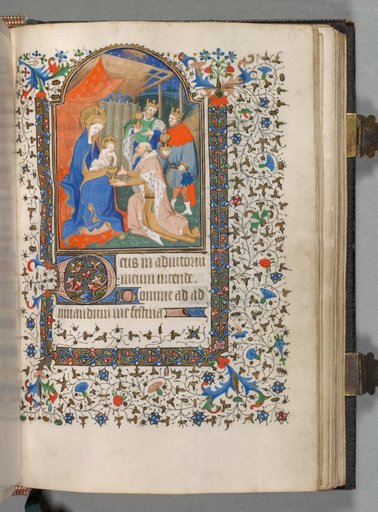 Book of Hours (Use of Paris): Fol. 67r, Adoration of the Magi