Portrait of an Official
From the collection of Cleveland Museum of Art. Free to download, adapt and use — no permission needed.
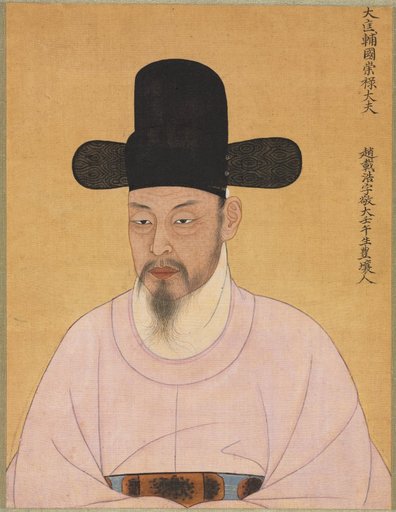
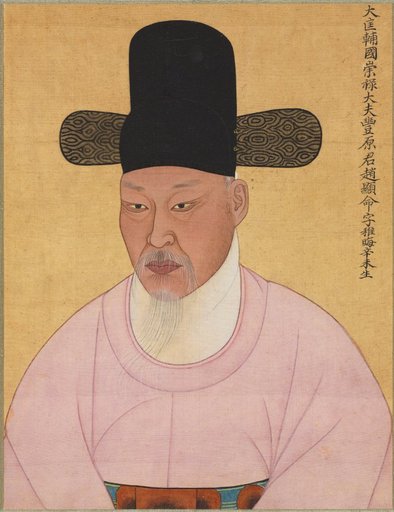
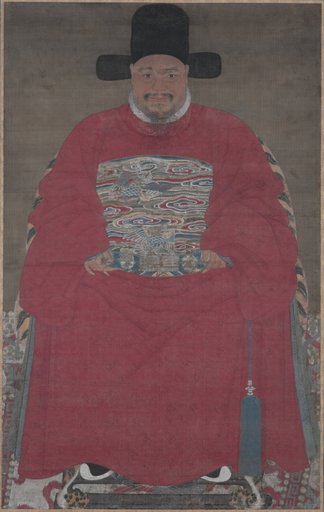
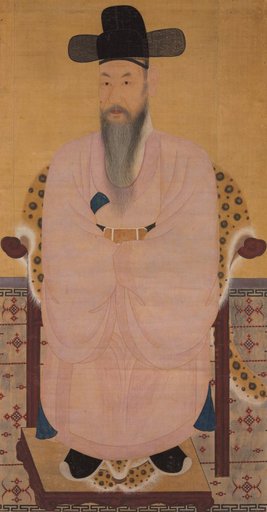
The quest of capturing one’s spirit through imagery held a special place in the tradition of portrait making in East Asia. A portrait’s resemblance to the subject was considered to be a way to transmit the sitter’s spirit to the viewer. A three-quarter view, much preferred in Joseon-period portraits like this one, allows the viewer to examine the sitter’s personality or spirit without an exchange of glances. Dressed in a pale pink court uniform, the gentleman sits on a chair draped with leopard skin, a symbol of royal favor. Due to the missing inscription, which was likely trimmed off, we cannot identify him. Yet, we know a few things: His uniform informs us that he worked in the royal court sometime during the 1700s or later because the color of office uniforms changed from dark green to pale pink in the early 1700s. Considered to be an important historical family relic, this type of full-length portrait was often placed above the spirit house and venerated during ancestral worship rituals.
Cleveland Museum of Art’s own description