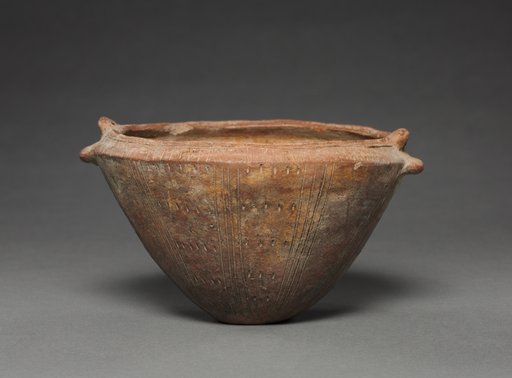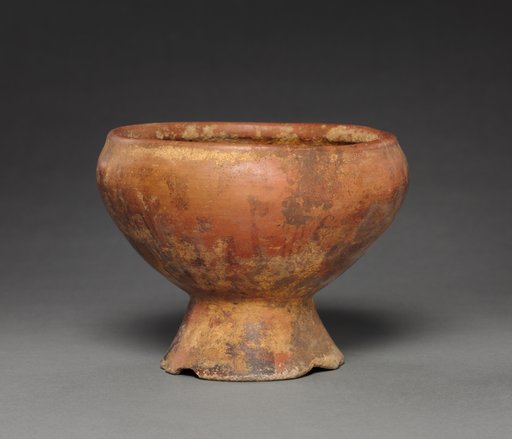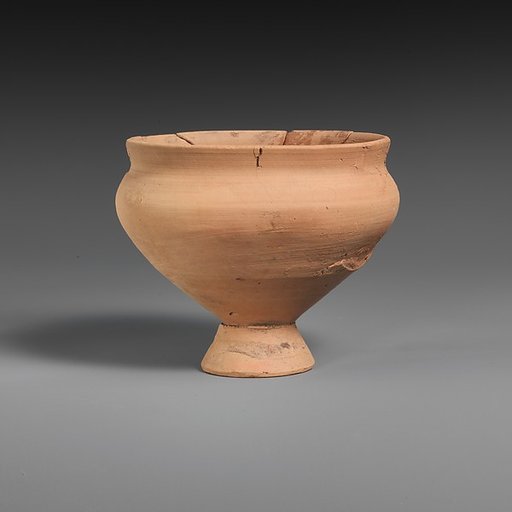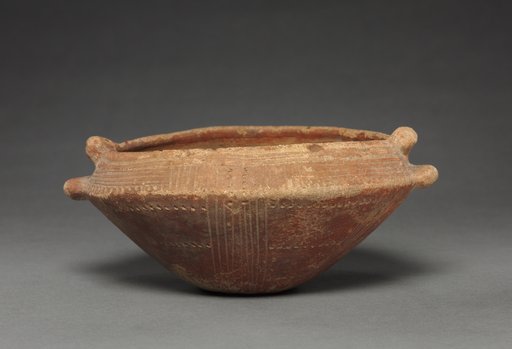
Pedestalled Dish
From the collection of Cleveland Museum of Art. Free to download, adapt and use — no permission needed.
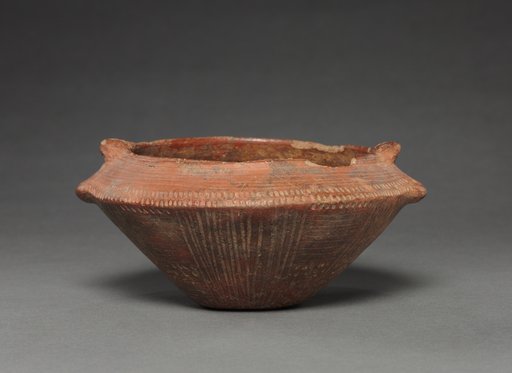
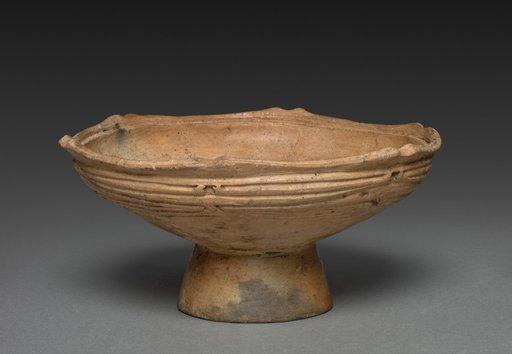
The Jomon period (10,500-300 BC) marks the beginning of the Japanese ceramic tradition, one of the most vibrant in world history. Major features such as an emphasis on asymmetrical silhouettes, great attention to surface texture, technological simplicity, and ambivalence to bright color already appear in this era. Late Jomon vessels are typically formed of a dense clay paste, and during this period, smaller serving vessels appear, in contrast to earlier deep storage or cooking vessel shapes. New types of surface decoration-carved rather than impressed into the clay body-herald the arrival of a distinctive aesthetic. The attachment of the pedestal to this shallow bowl, as well as the vessel's rather thin walls, also identify a new stage in ceramic production in Japan.
Cleveland Museum of Art’s own description