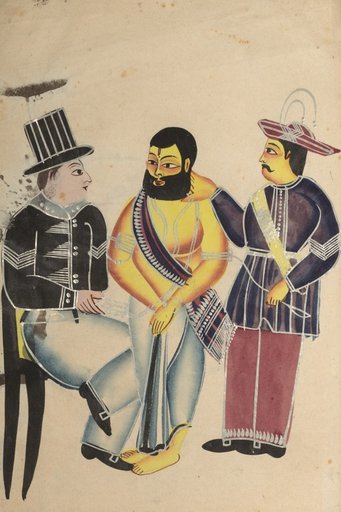
Jailer Receiving the Mahant of Tarakeshwar in Prison
From the collection of Cleveland Museum of Art. Free to download, adapt and use — no permission needed.
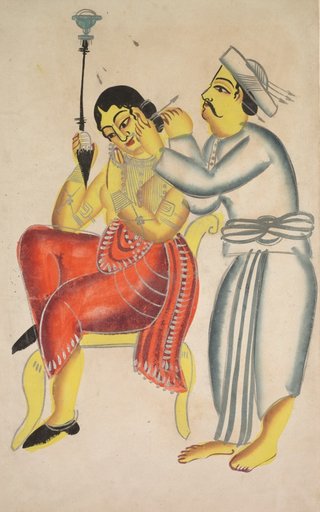
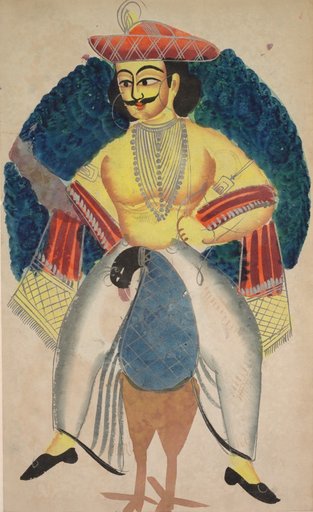
The Tarakeshwar murder case of 1873 was a public scandal in Calcutta (now Kolkata). It concerned an affair between Elokeshi, a young wife, and the chief priest of the Shiva temple at Tarakeshwar. Having learned about the affair, her jealous husband cut Elokeshi’s throat with a fish knife on May 27, 1873. In the subsequent trial, the husband, Banerji, was sentenced to life imprisonment and the priest was fined and imprisoned for three years. Several Bengali plays and Kalighat images were inspired by this affair and depicted events that did not actually occur but were imagined by the artist. Here the adulterer, the Mahant (head priest), is depicted roped to an Indian jailer and presented to an English (or Anglo-Indian) warden. The warden sits in a black chair, wearing an English top hat and holding in his right hand the Mahant’s warrant of commitment for adultery. Both the warden and jailer wear British-styled buckled shoes.
Cleveland Museum of Art’s own description