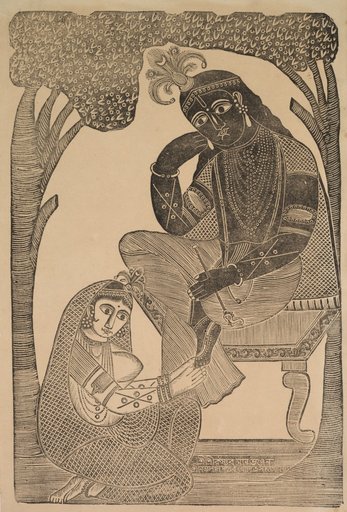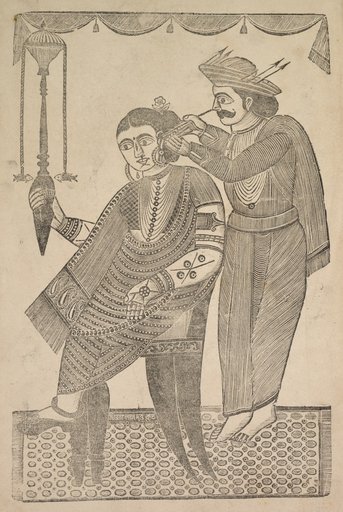
A Barber Cleaning the Ear of a Courtesan
From the collection of Cleveland Museum of Art. Free to download, adapt and use — no permission needed.
Popular Kalighat paintings were made into woodcuts for mass printing and distribution. This image reveals the lifestyle of a new middle class of Indians who prospered under British rule. Holding a fancy hookah for pleasurable smoking, draped with jewels, wearing a glamorous sari, and with a flower tucked in her hair, she has the luxury of going to a barber to have her ears cleaned. The age of mechanical reproduction made a heavy impact on the new Indian middle class during the last decades of the 1800s. British magazines and periodicals were fashionable among Indian households, and they served to shape their taste for British and Western styles and commodities. Cheaper prints such as this woodcut were made for more popular distribution. They spoke to aspirations or observations by a broader, less privileged community.
Cleveland Museum of Art’s own description