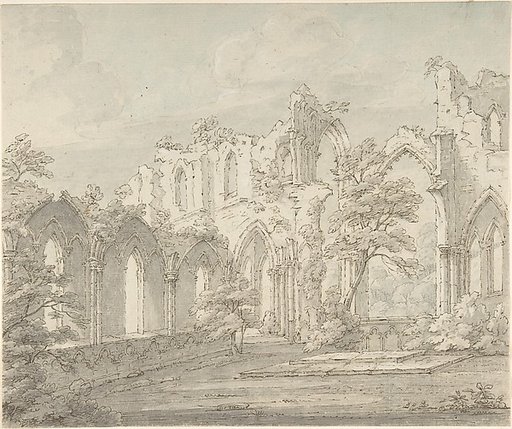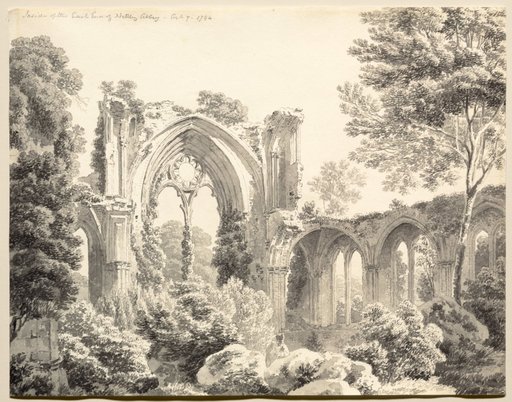
Inside the East End of Nettley Abbey
From the collection of Cleveland Museum of Art. Free to download, adapt and use — no permission needed.
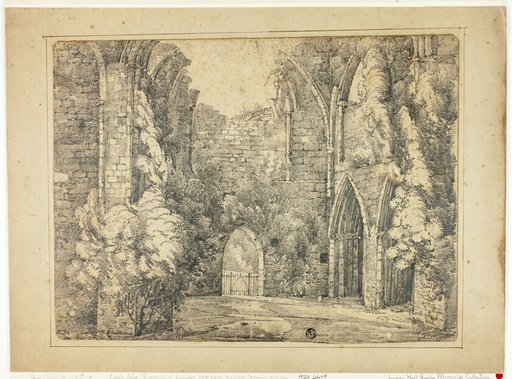
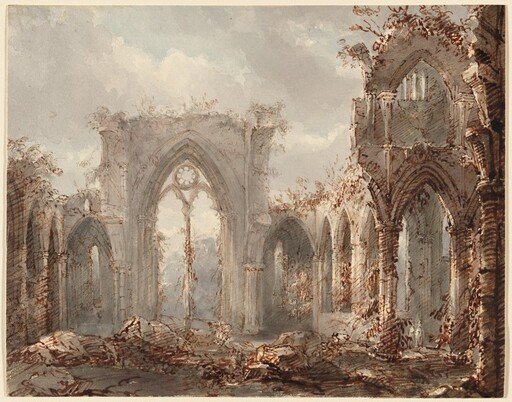
By the end of the 18th century, Britain’s medieval ruins had become popular tourist destinations and a rich source of inspiration for Romantic poets and painters, establishing a veritable "cult of ruins." Decaying Gothic architecture set in overgrown landscapes conjured thoughts of the transience of human ambition in the context of eternal nature. In 1755, the writer and Whig politician Horace Walpole described Netley Abbey: "The ruins are vast . . . with all variety of Gothic patterns of windows wrapped round and round with ivy—many trees are sprouted up against the walls and want only to be increased with cypresses! In short, they are not the ruins of Netley, but of Paradise." Michael Angelo Rooker’s drawing gives form to Walpole’s description of his magical visit to the ruined abbey.
Cleveland Museum of Art’s own description