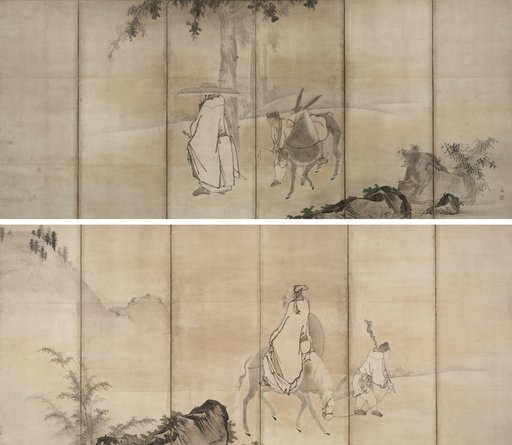
Su Shi (So Shoku) and Pan Lang (Han Rō)
From the collection of Cleveland Museum of Art. Free to download, adapt and use — no permission needed.
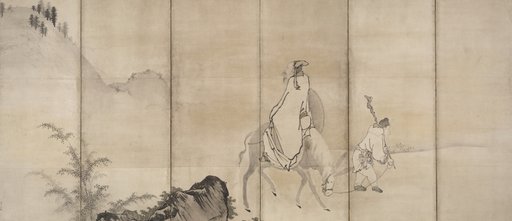
This pair of screens depicts episodes from the stories of famed Song-dynasty poets Su Shi of the 1000s and Zhou-dynasty official Pan Lang of the 900s. Both men were banished by their rulers for their perceived missteps. Su Shi’s comments on a series of economic reforms were seen as criticism of the emperor. Pan Lang composed an ill-advised verse about one of the king’s horses. In the left screen Pan rides backward on his donkey as he returns from exile so that he may have a last look at his now beloved Mount Hua. Su Shi, in the right screen, is shown embarking on his journey into exile. The artist of these screens, Unkoku Tōgan, was the founder of the Unkoku school of painting, which emulated the style of renowned ink painter Sesshū Tōyō (1420–1506). Tōgan was the official painter of the Mori family of what is now Yamaguchi prefecture in the south of Japan.
Cleveland Museum of Art’s own description