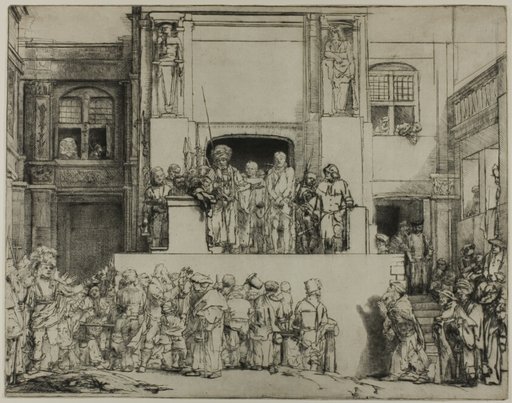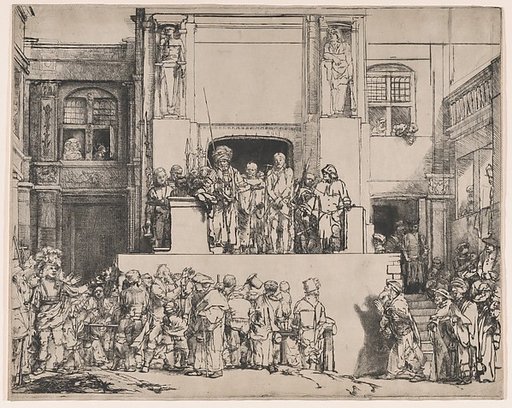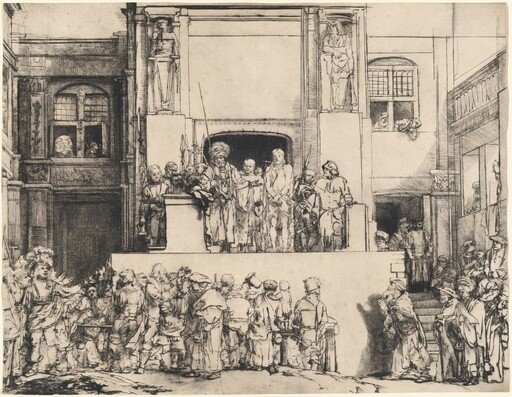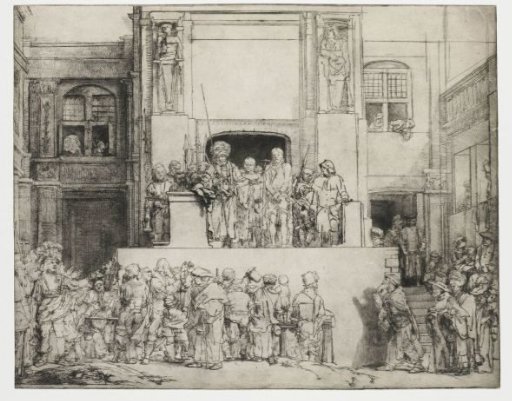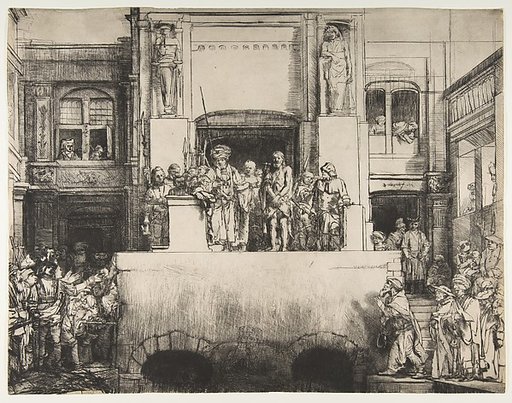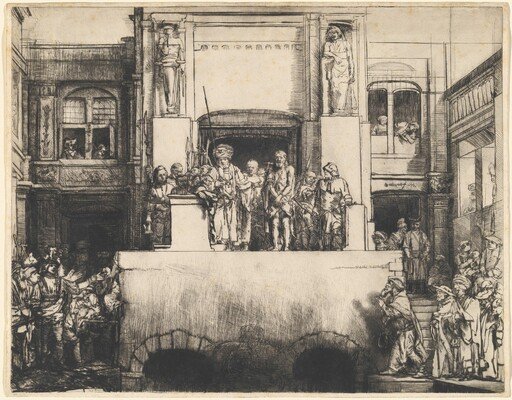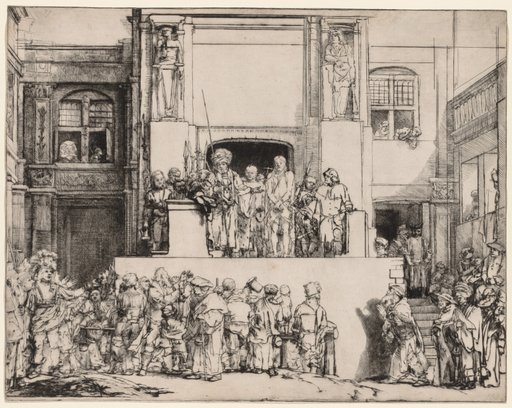
Ecce Homo. Christ Presented to the People
From the collection of Cleveland Museum of Art. Free to download, adapt and use — no permission needed.
Rembrandt was an experimental and innovative printmaker and the first to execute works in pure drypoint on this monumental scale. Drypoint produces blurred lines and rich, velvety shadows, but these effects are lost as the plate wears. A limited number of rich impressions exist like this fine example of the fifth state, which demonstrates how Rembrandt redefined the expressive potential of printmaking. Rembrandt’s habit of drawing from life made him a keen observer of behavior and body language, endowing his biblical scenes with a human dimension and veracity not seen previously. The throng in Christ Presented to the People represents a cross section of the population and reflects the pictorial tradition that common humanity condemned Christ. Large areas of the imposing building, symbolizing the crushing weight and authority of the state, remain unworked so that blank white paper seems radiant in contrast to rich black shadows.
Cleveland Museum of Art’s own description