CC0 · no rights reserved
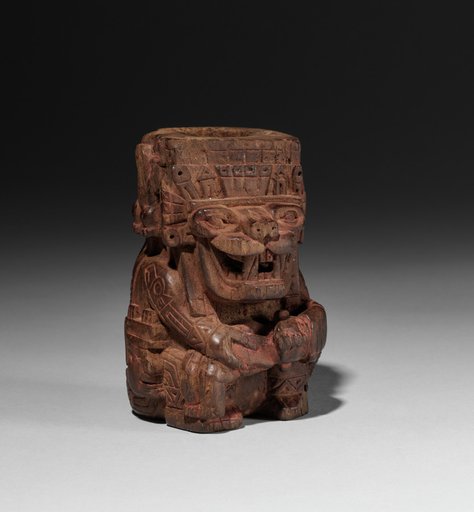
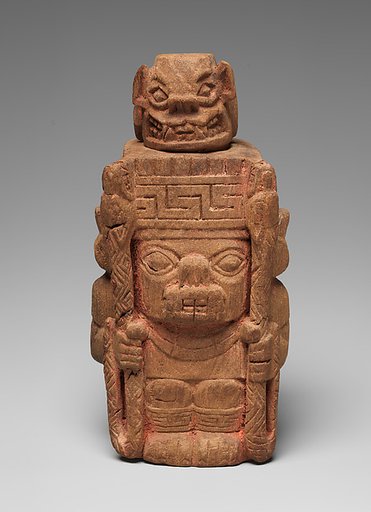
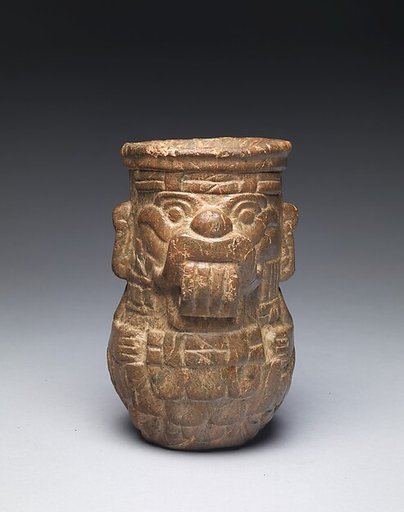
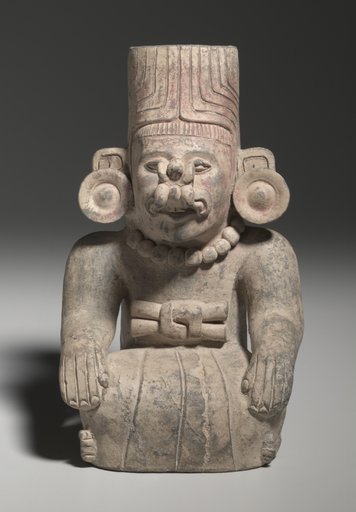
Sacrificer Container
From the collection of Cleveland Museum of Art. Free to download, adapt and use — no permission needed.
About this work
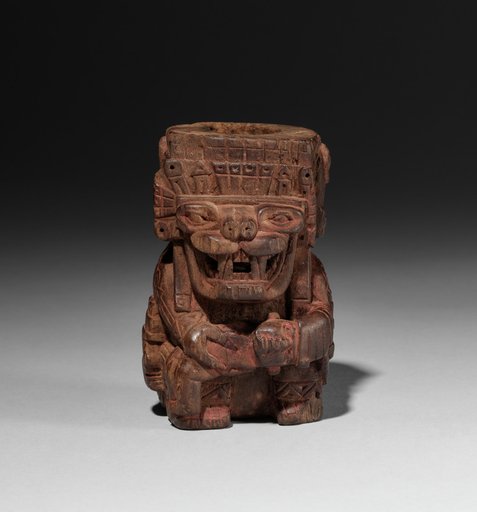
This container assumes the shape of a magnificent, feline-headed, supernatural sacrificer who draws a knife across the throat of the human it holds in its lap. Severed human heads hang from the feline's belt and dangle by the trachea at the back of its headdress. Sacrifice had a place in Wari religious practice, probably as an unusual and exceptionally precious offering made to entice the benevolence of cosmic forces. Indeed, colonial-period Andean people believed that death was a prerequisite for the renewal of the world.
Cleveland Museum of Art’s own descriptionCredit lineSacrificer Container, 770–890 (radiocarbon date, 95% probability). Central Andes, Wari style (600-1000). Wood and cinnabar; overall: 10.8 x 7 x 7.5 cm (4 1/4 x 2 3/4 x 2 15/16 in.). The Cleveland Museum of Art, John L. Severance Fund, 2007.193