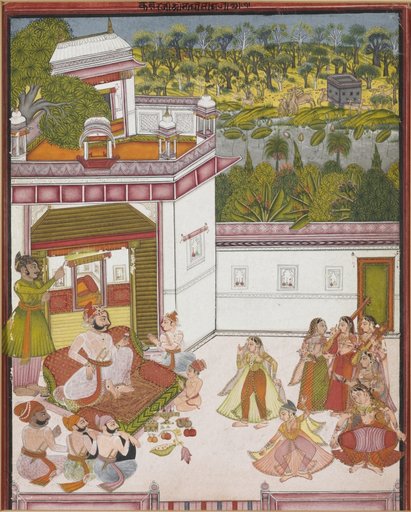
Maharaja of Kotah Listening to Music and Watching Dancers
From the collection of Cleveland Museum of Art. Free to download, adapt and use — no permission needed.
In the foreground the king enjoys food, wine, and a dance performance with his companions on the terrace of a palace residence. His hunting lodge is on the opposite bank of the river. Deer, wild boar, and the coveted tiger roam the forested wilderness. Rulers of the princely state of Kota adopted many architectural and costume elements from their overlords, the Mughal emperors. The mix of white marble and pink sandstone with rooftop pavilions and niches in the walls are typical of domestic architecture under the Mughals of India. By the early 1800s, Indian artists adopted an interest in conveying a sense of receding space from European paintings. This painter has convincingly rendered the space of the room behind the king, featuring a door to an inner bedchamber.
Cleveland Museum of Art’s own descriptionSimilar works
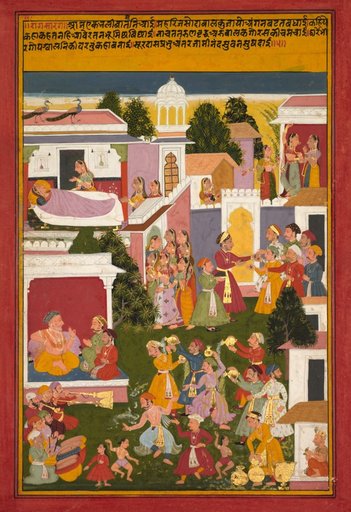 The Birth of Krishna, from a Sursagar of Surdas (Indian, c. 1480–1580)
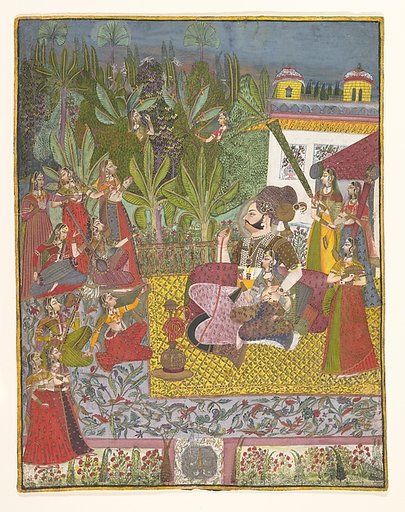 Maharaja Bijay Singh in His Harem
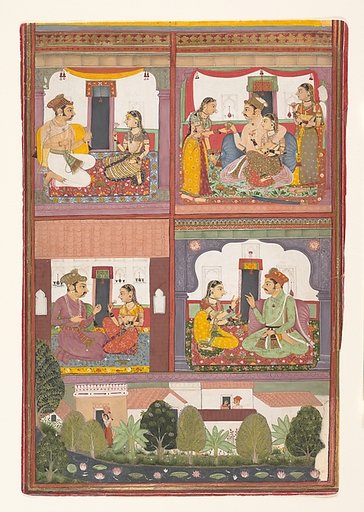 Four Love Scenes and a Landscape: Page from a Dispersed Raskapriya
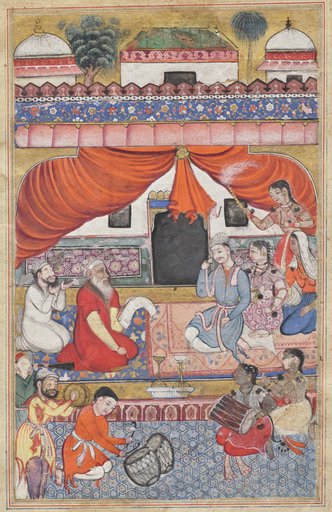 Preparation for the marriage of Mahmuda to the Young Vizier, from a Tuti-nama (Tales of a Parrot): Thirty-third Night
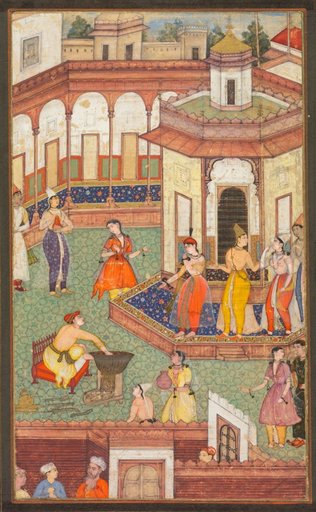 A Man Dips His Hand into a Cauldron as Ladies of the Harem Stand in Amazement: A Page from a Manuscript of Religious History
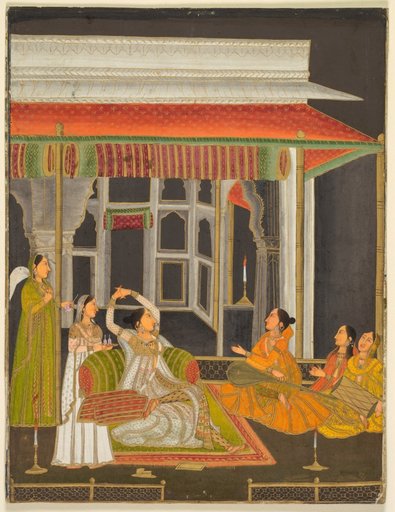 A Princess on a Terrace with Attendants at Night (recto)