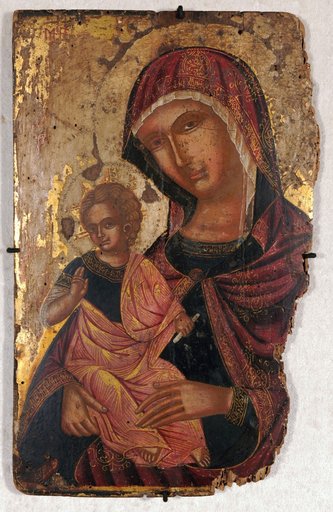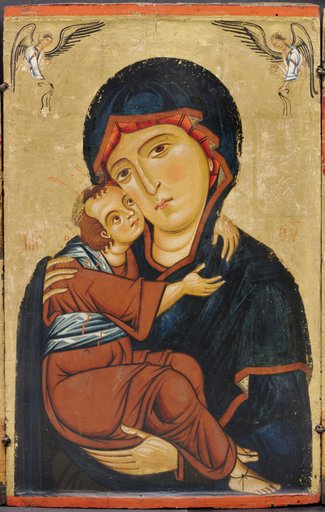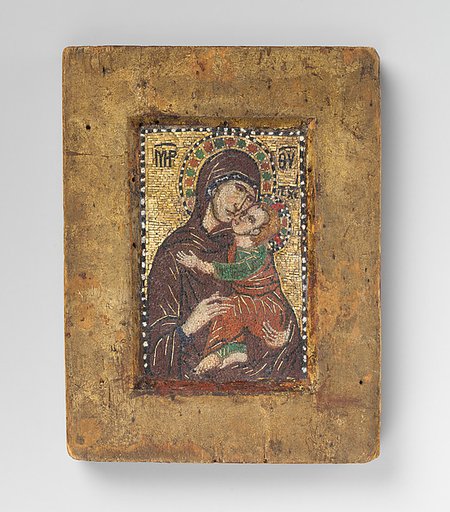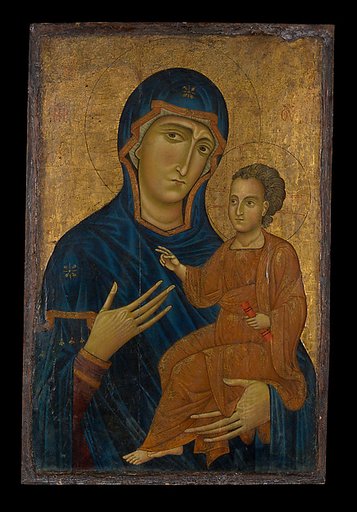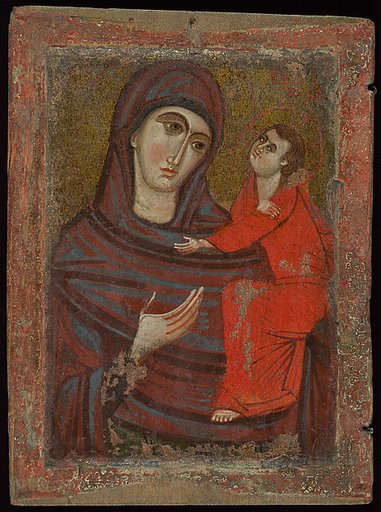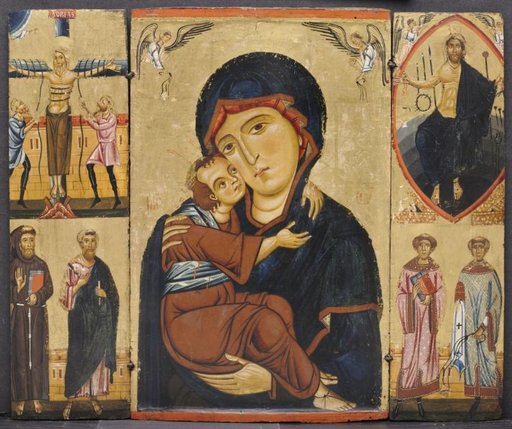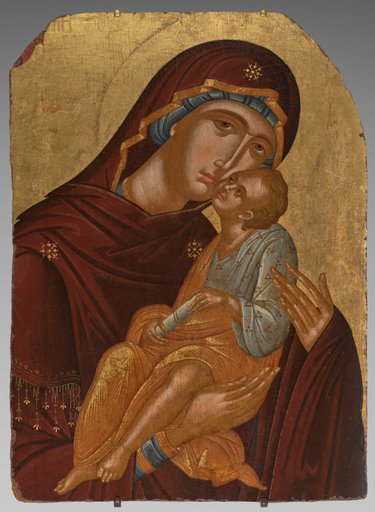
Icon of the Mother of God and Infant Christ (Virgin Eleousa)
From the collection of Cleveland Museum of Art. Free to download, adapt and use — no permission needed.
This large icon of a tender embrace between the Virgin Mary and Christ likely hung on a Greek Orthodox church’s iconostasis, a screen separating the congregation from the altar-containing sanctuary, which only clergy could enter. A skilled painter of faces and draperies, Angelos Akotantos was among Crete’s most sought-after artists. Based in Byzantium’s artistic center in his hometown of Candia, he painted for imperial clients and beyond. Despite theological differences, Cretan icons of Mary were popular in Ethiopia. In the early 1500s, Emperor Lebna Dengel sent monks Zekre and Pawli to acquire Cretan icons for him. Twenty-nine Cretan icons are still venerated (honored) in Ethiopian churches.
Cleveland Museum of Art’s own description