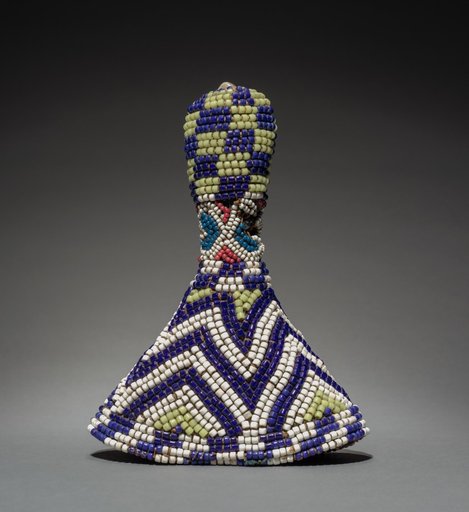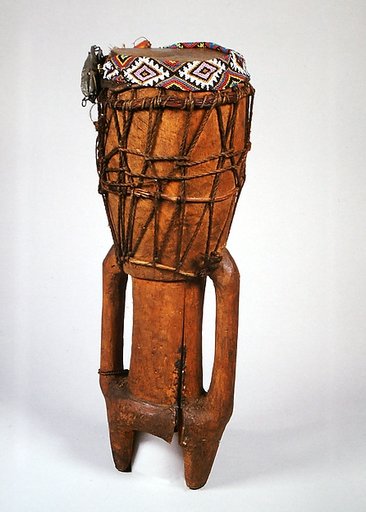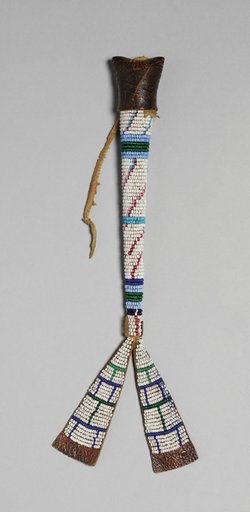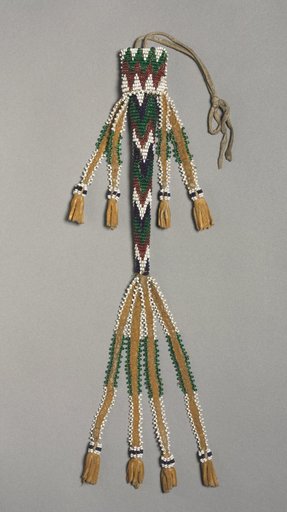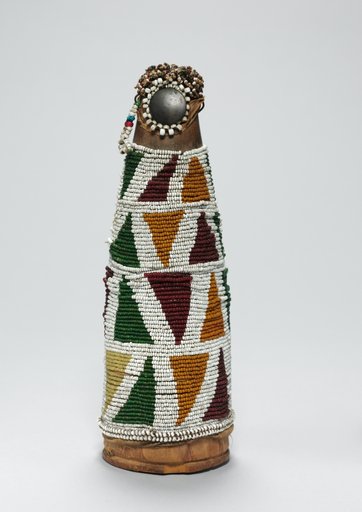
Figure (kgöngwana-tshingwana/Ngwana sehô)
From the collection of Cleveland Museum of Art. Free to download, adapt and use — no permission needed.
Historically, figures made from bundled reeds or bead-covered wooden forms––such as this example––were linked to fertility in Sotho communities. A man carved the wooden core, while a woman covered it with fabric and beads. The small size of the glass beads indicates their age, while the patterns can be linked to Sotho aesthetics. Like the beads, the round metal disc that functions as the figure's face would have been imported. While no longer used, records indicate these figures may have been used in several contexts associated with conception, including the initiation ceremonies of young girls, divination rites, or as gifts to brides who might symbolically care for the figure in advance of her firstborn's arrival. Some accounts even describe them as toys. Meanings and appearances both appear to have changed over time.
Cleveland Museum of Art’s own description