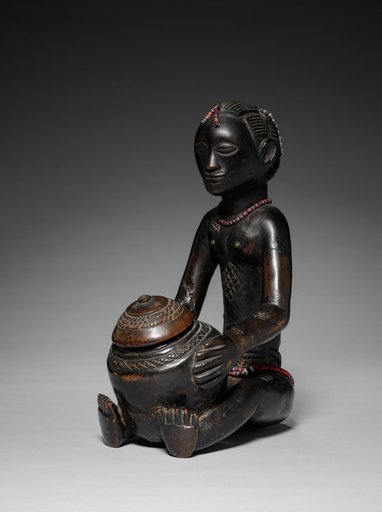
Female Bowl-Bearing Figure
From the collection of Cleveland Museum of Art. Free to download, adapt and use — no permission needed.
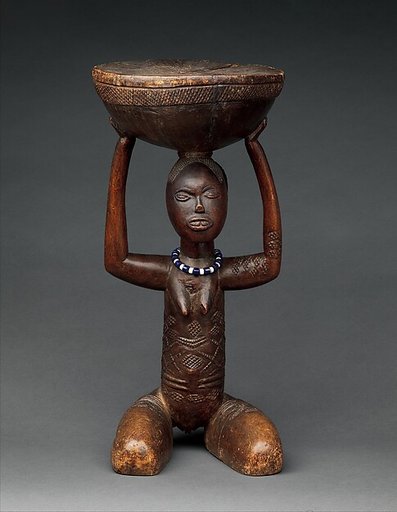
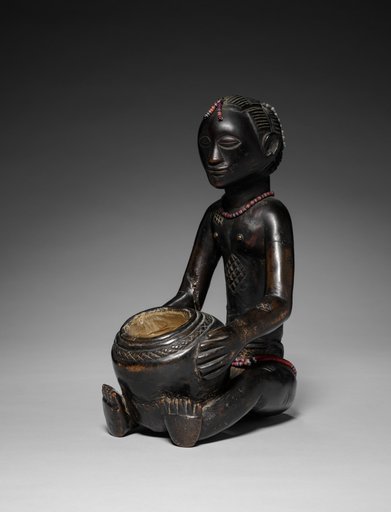
In Luba-style art, an object's beauty affects how well it works. While bowl-bearing figures had many possible uses, a royal diviner likely used this well-carved image of a woman carrying a bowl in rituals. Dusty traces of mpemba (white chalk) fleck the shining exterior and the bowl's interior, showing it once held this sacred powder. Diamond-shaped scarification marks at her waist, chest, and back add to her beauty. Her hair is carved into the cascading layered hairstyle worn in the Luba region at the turn of the twentieth century. Strands of imported glass beads encircle her waist and neck, and dangle from her hair. The alternating white and blue beads may symbolize the moon and Mbidi Kiluwe, a culture hero linked to royal practice and smithing. While much Luba-style art depicts women--who are societally important--men created and owned the majority of such works.
Cleveland Museum of Art’s own description