Bacchanalian Relief
From the collection of Cleveland Museum of Art. Free to download, adapt and use — no permission needed.
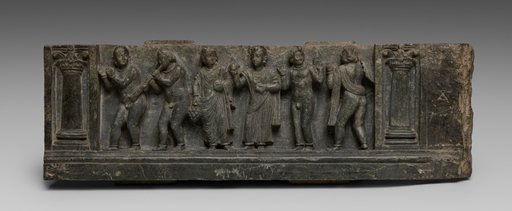
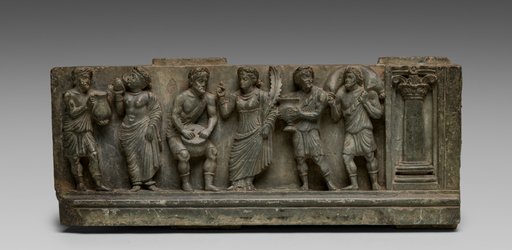
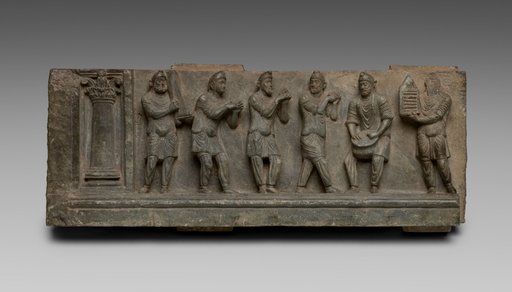
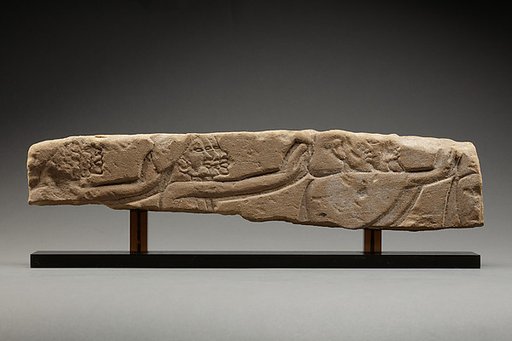
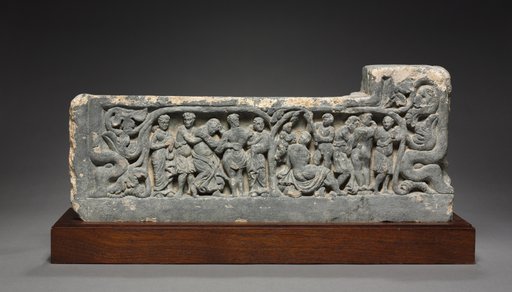
Grape vines create vignettes with scenes of drunken revelry on this architectural carving that once fit by joinery to other carved stone blocks at the base of a Buddhist monument. Bacchus himself, the Greco-Roman god of wine, may be the third figure from the left; bearded, portly, and inebriated, his garment slips as he collapses. Cupid and Aphrodite appear in the vignette on the right next to an amorous couple. On the side is a female nature divinity, grasping the branch of a tree, but unlike her counterparts from farther south in India, she is clothed in a long tunic, pants, and scarf associated with the dress of the Central Asian nomadic groups.
Cleveland Museum of Art’s own description