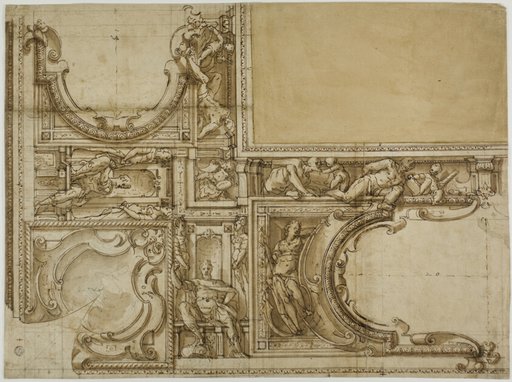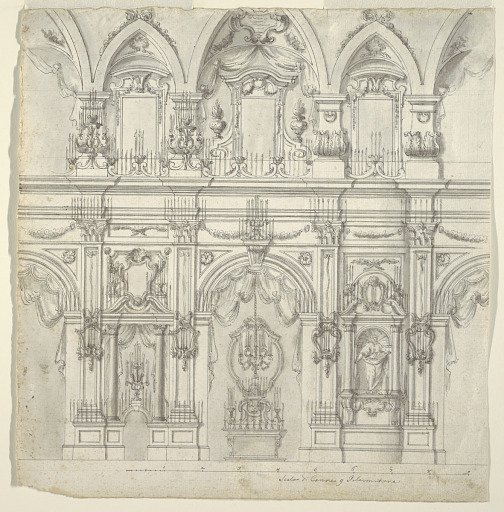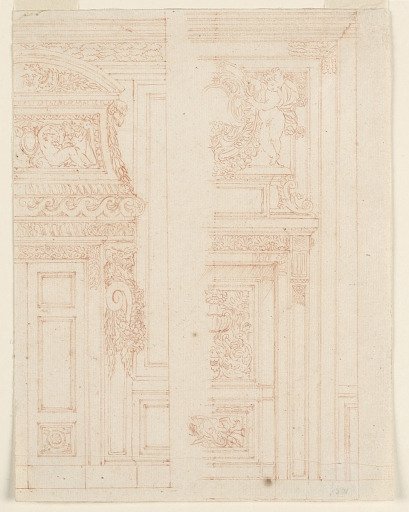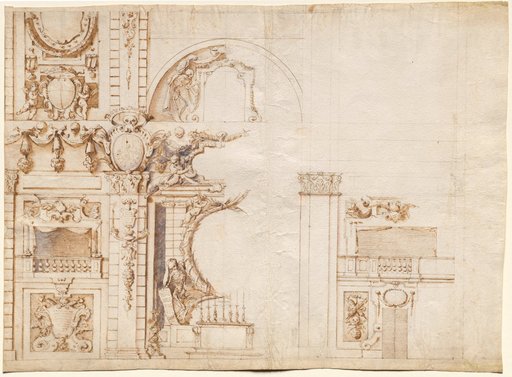
Study for the 'Essequie' Conducted in San Lorenzo, Florence, in 1637 in Honour of Holy Roman Emperor Ferdinand II
From the collection of Cleveland Museum of Art. Free to download, adapt and use — no permission needed.
Alfonso Parigi was the official court architect for the Medici, taking over after the death of his father, the great engineer, architect, and designer Giulio Parigi. Testifying to the Medici's interest in cultivating a culture of the macabre, this sheet is an elaborate study for the essequie (funerary rites) for the Holy Roman Emperor Ferdinand II. Skulls and skeletons commingle with angels and garlands, and black draperies would have been hung to transform the church into a strange, macabre world. The Medici also commissioned artists and designers to create apparati , theatrical stage settings that were similarly elaborate, hell-like scenes. Designed only three years before the young Rosa would come to the court, this haunting sheet displays the grotesque artistic fantasia that was in vogue in Florence when Salvatore Rosa arrived.
Cleveland Museum of Art’s own description