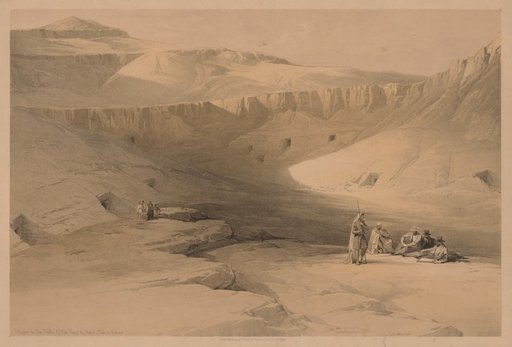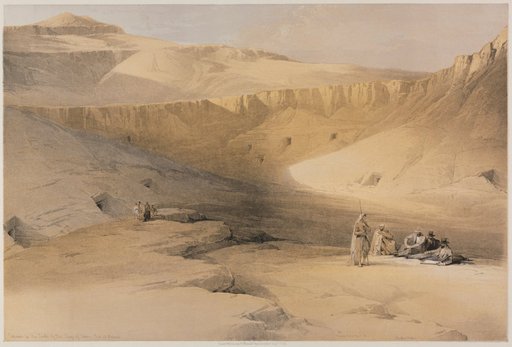
Egypt and Nubia, Volume II: Entrance to the Tombs of the Kings of Thebes, Bab-El-Malouk
From the collection of Cleveland Museum of Art. Free to download, adapt and use — no permission needed.
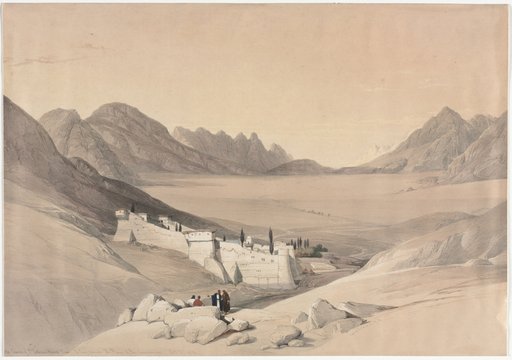
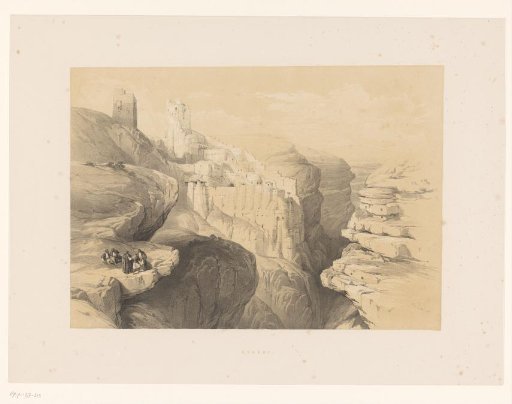
By the mid-19th century, the complexities of printing in numerous colors had been mastered, culminating in one of the high points of European printmaking. The plates drawn by Haghe, which copy the watercolors that David Roberts made in Egypt, are exquisite examples of color lithography. Egypt was a distant, mysterious country for Europeans and Haghe, a Scottish topographical and architectural artist who spent the year of 1838 traveling across this ancient land. The resulting prints—the first comprehensive series of views of the monuments, landscapes, and people of the Near East—were especially appreciated for their brilliant color and large scale.
Cleveland Museum of Art’s own description