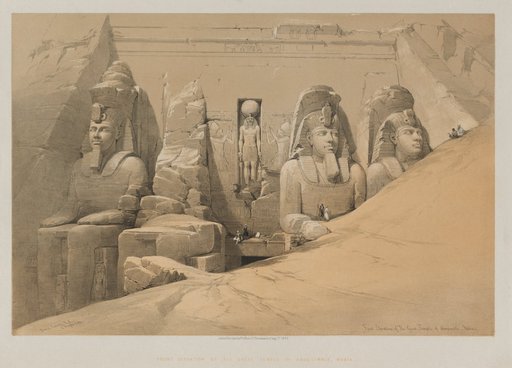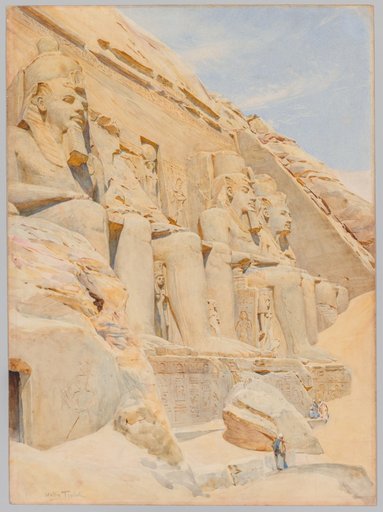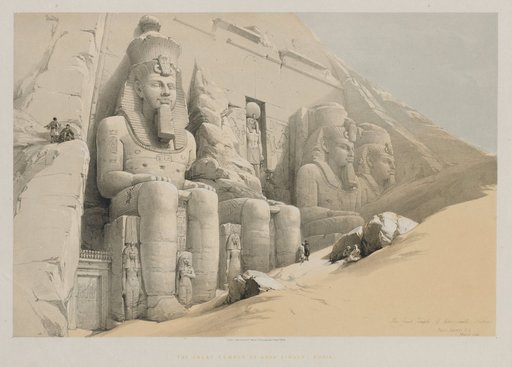
Egypt and Nubia, Volume I: The Great Temple of Aboo-Simble, Nubia
From the collection of Cleveland Museum of Art. Free to download, adapt and use — no permission needed.
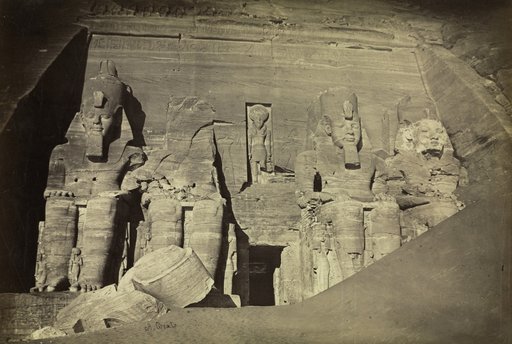
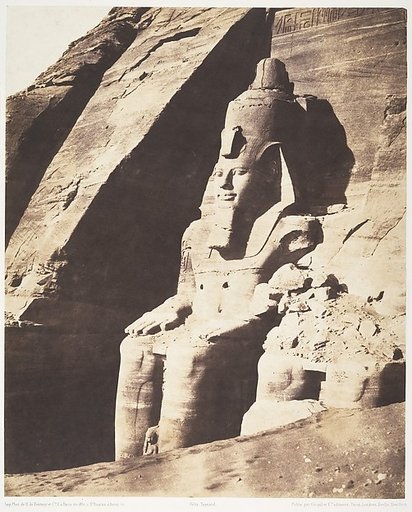
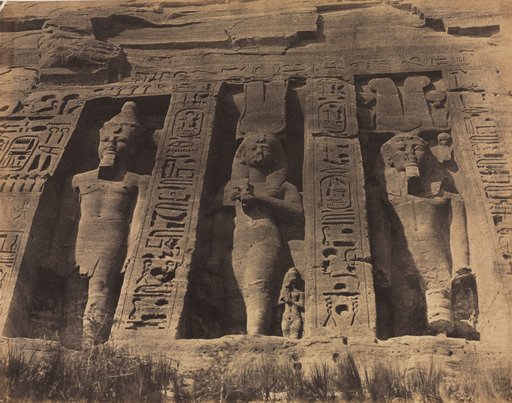
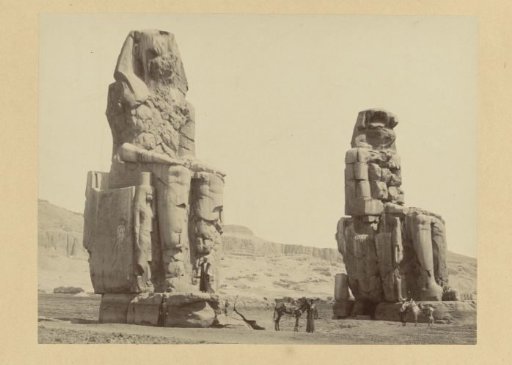
Throughout the 1800s and into the 1900s, prints, paintings, and photographs, like Louis Haghe’s Egypt and Nubia series, brought back by artists who voyaged to Egypt, inspired American and European artists, architects, and designers to emulate ancient Egyptian motifs and styles. Egyptomania blossomed through the 1800s and can be seen in architecture around cities like Washington, DC, and in the interiors of aristocratic homes, as well as in funerary monuments, such as in Lake View Cemetery in Cleveland, Ohio. Looking back at these creations provides an interesting historical groundwork for debating who has the right to interpret Egyptian motifs and styles.
Cleveland Museum of Art’s own description