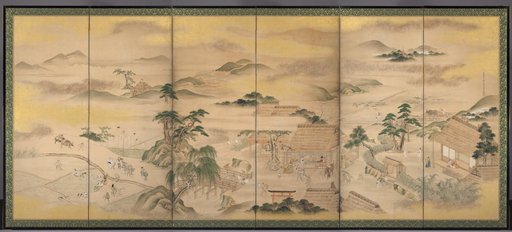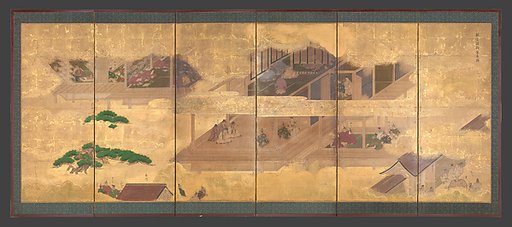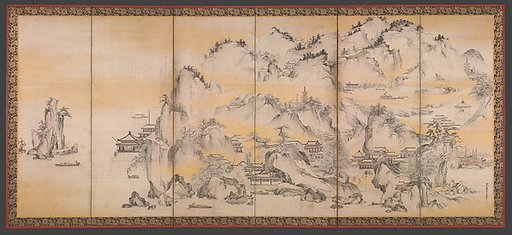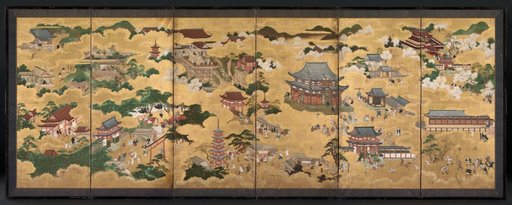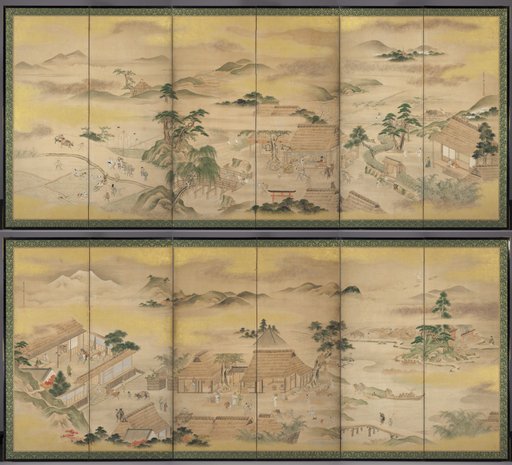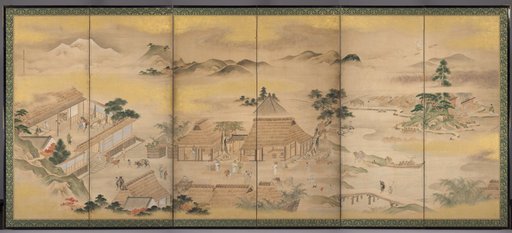
Spring and Autumn Farming (Autumn)
From the collection of Cleveland Museum of Art. Free to download, adapt and use — no permission needed.
These screens present the cycle of the farming year, starting with spring at right and ending with fall at left. Close examination of these screens reveals moments of games and amusement, the enjoyment of meals as well as intellectual and spiritual pursuits interspersed among the scenes of cultivating and preparing the rice harvest. The artist Kō Sūkoku is considered the 18th-century heir in style and attitude to Hanabusa Itchō (1652–1724). Itchō’s work incorporated elements from Kano school, ukiyo-e, and literati styles of painting. Kō trained with one of Hanabusa’s pupils, Sawaki Sūshi, who was best known for scenes depicting everyday life and customs.
Cleveland Museum of Art’s own description