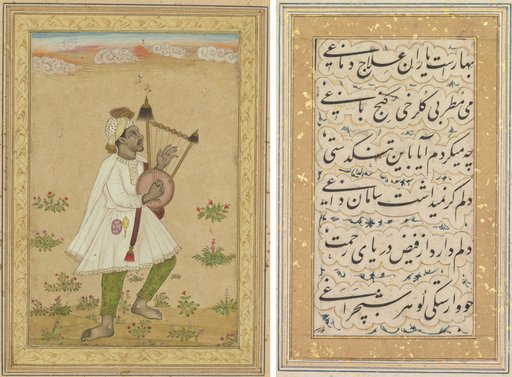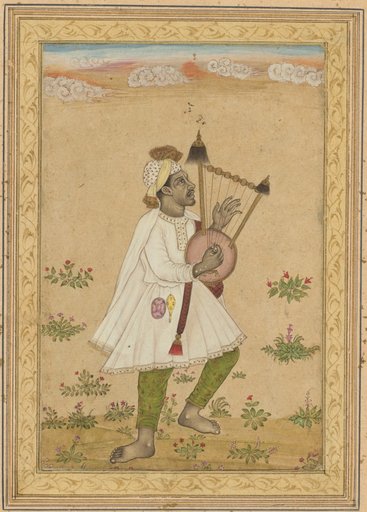
An African Lyre Player (recto)
From the collection of Cleveland Museum of Art. Free to download, adapt and use — no permission needed.
The anonymity of the subject of this painting obscures whether this is a portrait of a historical person, or a generic depiction of a musician. The instrument in his hands is a bowl lyre, called a nanga, of the type from Nubia in northeastern Africa. Many Africans, mainly from Ethiopia, settled in the Deccan, on the western coast of southern India, where they found employment as soldiers, mercenaries, and administrators. While stereotypical associations of Africans with music and dance persist in this Deccani album page, the figure is well dressed and less caricatured than the painting from 100 years earlier of the dancing Zangi in the Tuti-nama (Tales of a Parrot).
Cleveland Museum of Art’s own description