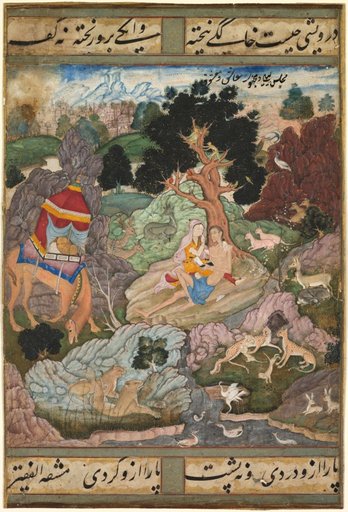
Layla and Majnun in the wilderness with animals, from a Khamsa (Quintet) of Amir Khusrau Dihlavi
From the collection of Cleveland Museum of Art. Free to download, adapt and use — no permission needed.
Nestled in the multicolored rocks are the reunited lovers Layla and Majnun, forced by society to remain separated for years. Majnun’s name means “madman,” since the separation drove him past the brink of sanity. Exiling himself to the wilderness, he became emaciated. When Layla found him after a prophetic dream, the wild animals gathered around, drawn to the purity and depth of their love. This painting illustrates a version of the story as told by an Indian author who wrote in Persian. He altered the ending given by previous Persian authors to the ancient Bedouin tale that originated among nomadic tribes of the Arabian Peninsula, in which Layla dies before the couple can be physically reunited.
Cleveland Museum of Art’s own descriptionSimilar works
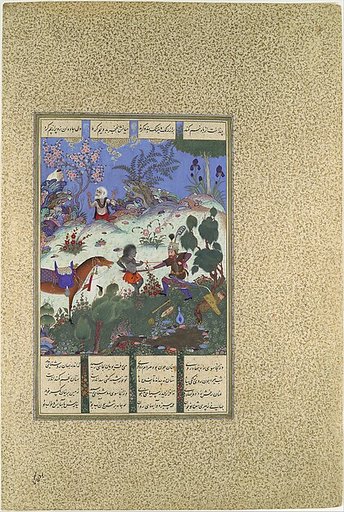 "Rustam's Fourth Course, He Cleaves a Witch", Folio 120v from the Shahnama (Book of Kings) of Shah Tahmasp
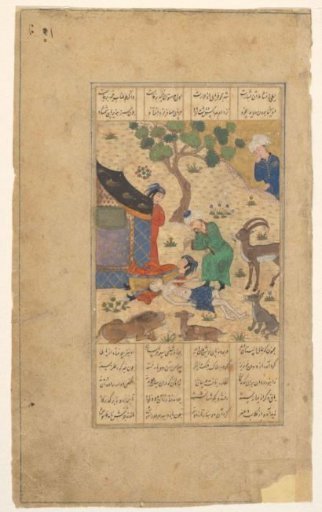 Laila and Mainum
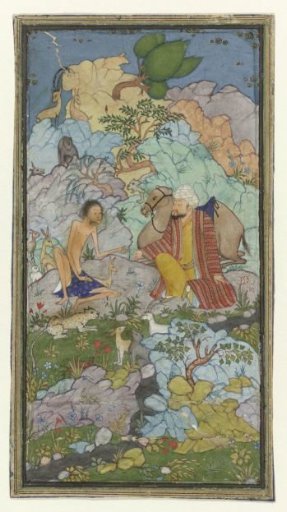 Episode from the love story of Laila and Majnun, the emaciated Majnun sitting in a landscape with a man and his camel
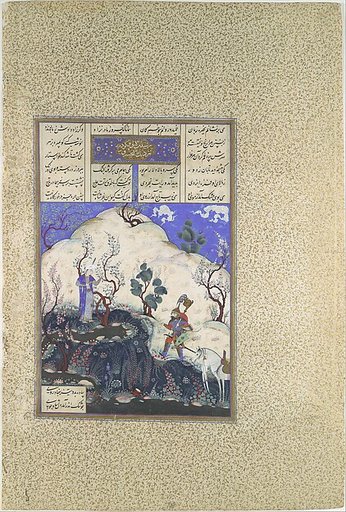 "Kai Khusrau is Discovered by Giv", Folio 210v from the Shahnama (Book of Kings) of Shah Tahmasp
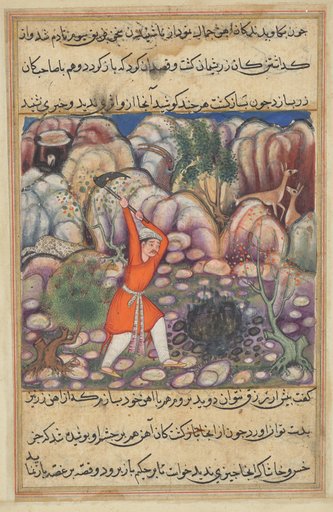 The fourth man digs at the spot where he dropped the shell, expecting jewels, but discovering mere iron, from a Tuti-nama (Tales of a Parrot): Forty-seventh Night
![Nushirwan Listens to the Owls (recto): Illustration and Text, Persian Verses, from a Manuscript of the Khamsa of Nizami, Makhzan al-Asrar [Treasure of Secrets]](https://thumbs.arkivism.com/cma-123990.jpg) Nushirwan Listens to the Owls (recto): Illustration and Text, Persian Verses, from a Manuscript of the Khamsa of Nizami, Makhzan al-Asrar [Treasure of Secrets]
Nushirwan Listens to the Owls (recto): Illustration and Text, Persian Verses, from a Manuscript of the Khamsa of Nizami, Makhzan al-Asrar [Treasure of Secrets]