Woman's Skirt
From the collection of Cleveland Museum of Art. Free to download, adapt and use — no permission needed.
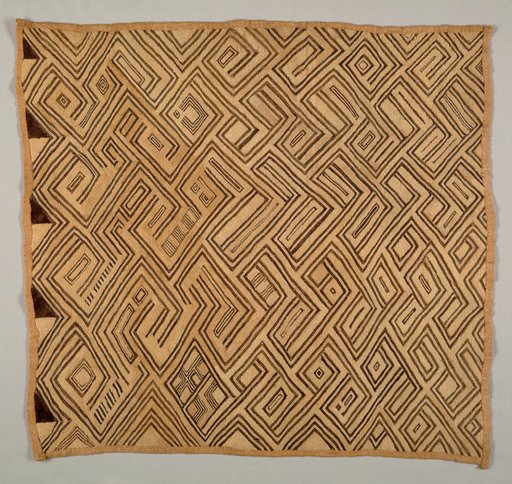
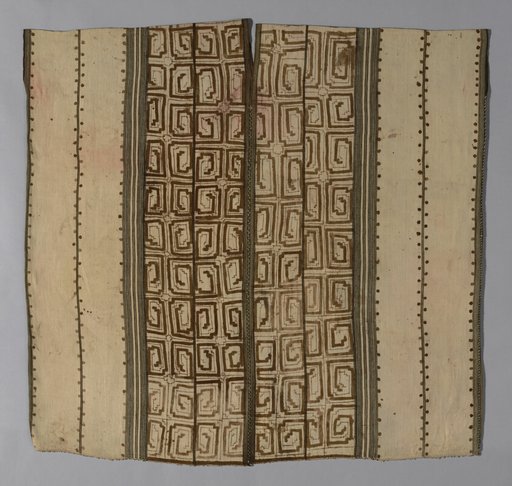
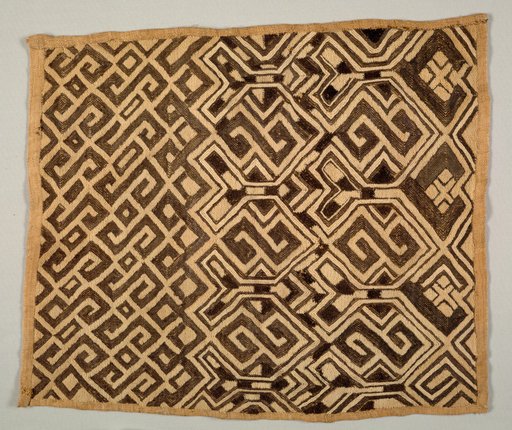
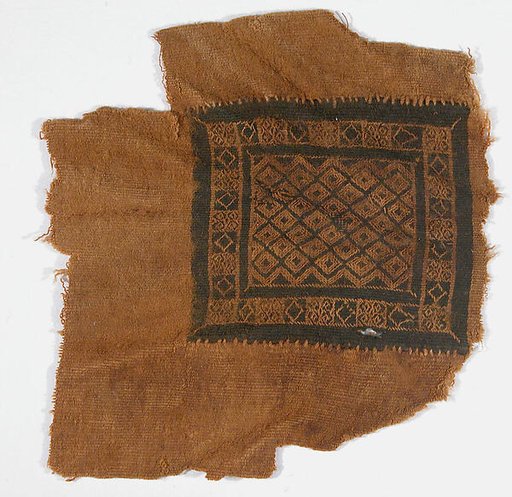
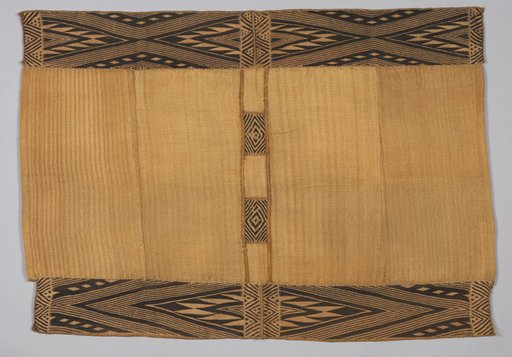
Mbuun men wove and embroidered wrap skirts like this for women to wear on special occasions. Gently color-shifted patterns ( lubawa ) along the central panels were achieved by “floating” wefts (selectively covering over vertical, or warp, threads with horizontal, or weft, threads). In contrast, various black-brown embroidered diamonds cover the borders. These are called lobubasa, motifs also seen on cicatrices (ornamental scars) that once beautified women’s bodies. Short tufts running horizontally and vertically across the textile were created by inserting extra fibers, then cutting and fluffing them with a knife. These add texture and hide the seams between woven panels.
Cleveland Museum of Art’s own description