CC0 · no rights reserved
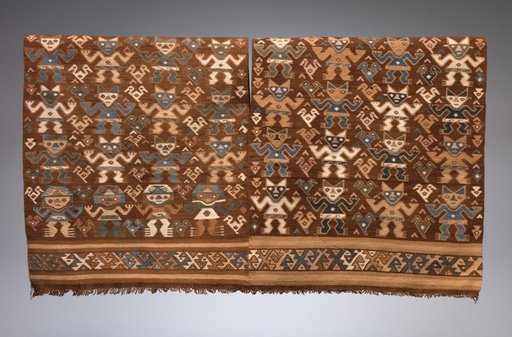
Tunic with Frontal Figures
From the collection of Cleveland Museum of Art. Free to download, adapt and use — no permission needed.
About this work
This tunic was made by weavers of the Ychsma ( yeach -mah ) people, who were affiliated with Pachacamac, a vast religious center that housed an oracle. The figures repeated across its composition may represent important ancestors or high-ranking members of society. The tunic likely dates to the period after the Inka Empire conquered Ychsma coastal territory, eventually becoming the largest Indigenous empire to have existed in the ancient Americas.
Cleveland Museum of Art’s own descriptionCredit lineTunic with Frontal Figures, 1400–1532. Central Andes, Central Coast, Ychsma (Pachacamac) people. Cotton; slit tapestry weave; neck edge to hem: 46.7 cm (18 3/8 in.); width across shoulders: 81.9 cm (32 1/4 in.). The Cleveland Museum of Art, Severance and Greta Millikin Purchase Fund, 2016.267