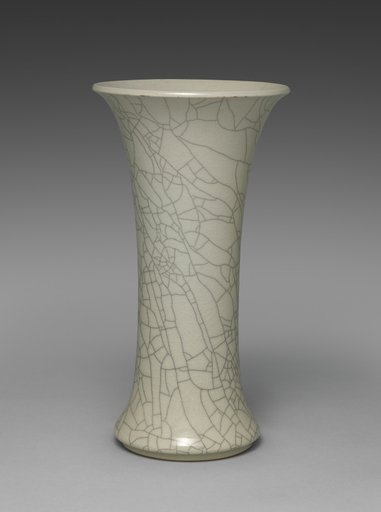
Gu-shaped Vase
From the collection of Cleveland Museum of Art. Free to download, adapt and use — no permission needed.
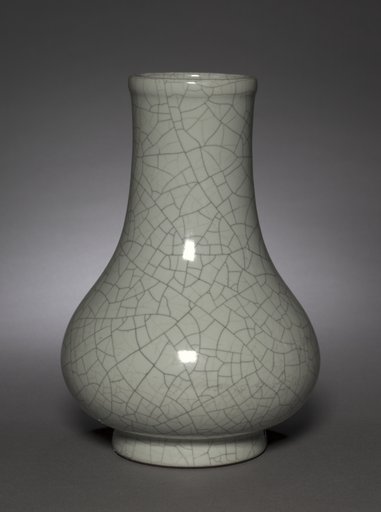
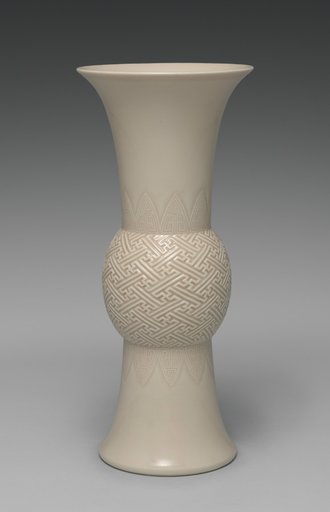
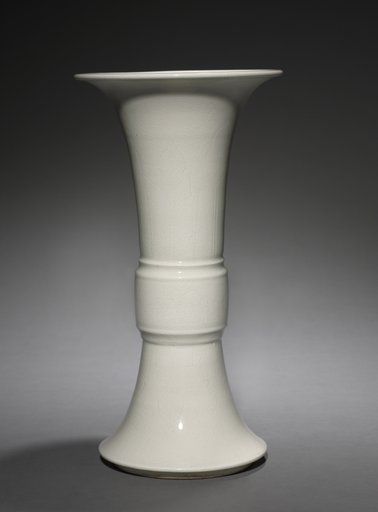
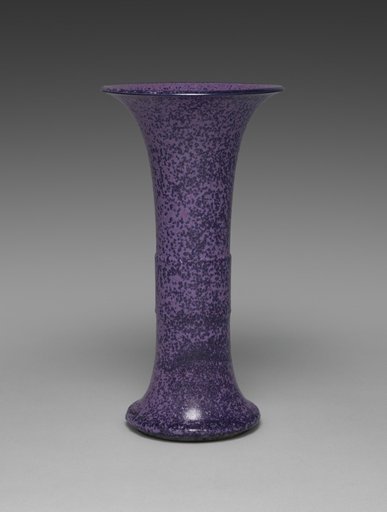
Seifū Yohei III mined the repertoire of Chinese vessel types, from ceramics modeled after ancient ritual bronzes to shapes developed in the Yuan (1279–1368) and Ming (1368–1644) dynasties. His designs tended to be formal and restrained, often featuring creamy white glazes suggestive of the hue of Ding ware and green glazes resembling Longquan ware. This gu -shaped vase has a cracked-ice glaze, which was once customarily called Ge (Japanese pronunciation Ka ), after the kiln where it purportedly originated during the Southern Song dynasty (1127–1279). The glaze’s double-crackle pattern, featuring both deeper and shallower cracks, is called “gold threads and iron lines.” The effect was enhanced here by coating the vessel with ink or another stain, which was allowed to seep into the cracks before the surface was wiped clean.
Cleveland Museum of Art’s own description