CC0 · no rights reserved
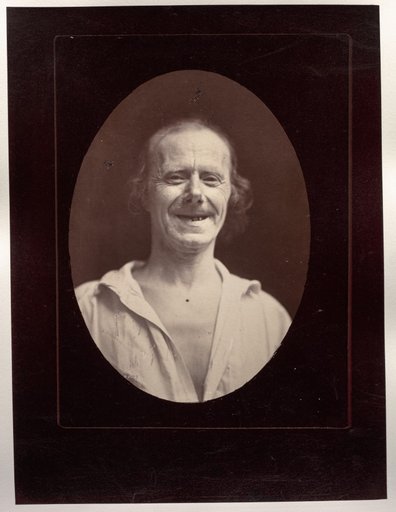
Figure 32: Natural laughter by the voluntary contraction of the two large zygomatics and the lower palpebral orbicularis
From the collection of Cleveland Museum of Art. Free to download, adapt and use — no permission needed.
About this work
Duchenne embarked on the first scientific, systematic exploration of the physiology of human facial expression and hoped, through photographs of the experiments, to teach artists how to portray those emotions. Here, he has photographed a subject’s natural smile and described the muscles creating it. In subsequent photographs, he used an electrode to contract one of the muscles that convey that same emotion.
Cleveland Museum of Art’s own descriptionCredit lineThe Mechanism of Human Physiognomy: Figure 32: Natural laughter by the voluntary contraction of the two large zygomatics and the lower palpebral orbicularis, c. 1856, printed 1862. Guillaume-Benjamin-Amand Duchenne (de Boulogne) (French, 1806–1875), Adrien Tournachon (French, 1825–1903). Albumen print from glass plate negative; image: 15.1 x 11 cm (5 15/16 x 4 5/16 in.); paper: 22.7 x 17 cm (8 15/16 x 6 11/16 in.); mounted: 41 x 27.6 cm (16 1/8 x 10 7/8 in.). The Cleveland Museum of Art, Severance and Greta Millikin Trust, 2018.9