CC0 · no rights reserved
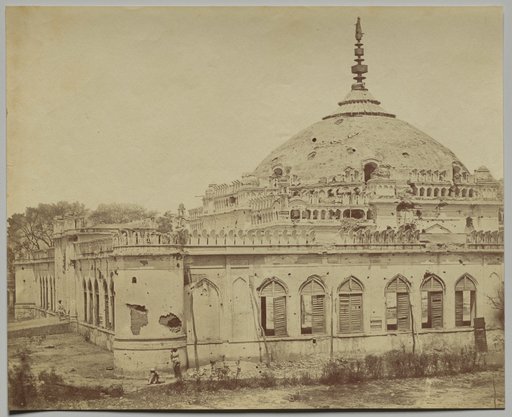
Small Mosque in the Kaiserbagh
From the collection of Cleveland Museum of Art. Free to download, adapt and use — no permission needed.
About this work
Built for Wajid Ali Shah (1847–1856), between 1848 to 1850, Kaiserbagh Palace is a fine example of 1800s architecture in Lucknow, northern India. Parts of Kaiserbagh Palace were destroyed during the Indian Rebellion (an uprising against British rule), also known as the First War of Independence in 1857. This photograph captures the small mosque of the palace after the British siege of the city. Mosques are Muslim places of worship, used for five daily prayers, teaching the Qur’an, and community gatherings. The small mosque in the Kaiserbagh complex, however, served primarily the ruler’s family and members of the court.
Cleveland Museum of Art’s own descriptionCredit lineLucknow After the Siege: Small Mosque in the Kaiserbagh, 1858. Felice A. Beato (British, 1832–1909). Albumen print; image: 25.4 x 30.5 cm (10 x 12 in.). The Cleveland Museum of Art, Severance and Greta Millikin Purchase Fund, 2019.170.16
![[Temple at Karnaul Sirhinde]](https://thumbs.arkivism.com/met-287665.jpg)