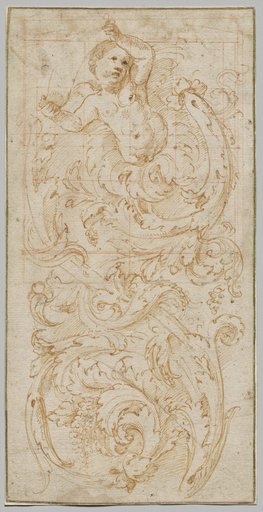
Design for a Frieze with a Putto and Acanthus Leaves
From the collection of Cleveland Museum of Art. Free to download, adapt and use — no permission needed.
After working to fresco the papal apartments in Rome under Raphael in the 1510s, Giulio Romano became the court artist to Federico II Gonzaga, 1st Duke of Mantua (r. 1530–40), where his universal talents as an architect, designer, and painter transformed the duke’s unadorned Palazzo del Te into an elaborate setting for leisure and courtly activity. It was through drawings that Giulio planned everything from the most important narrative sequences of the palace, to the most seemingly insignificant ornamental details. This drawing—perhaps a design for a rinceaux, a frescoed decoration to the side or above a doorway—depicts Giulio’s typically inventive approach to classical ornament, with acanthus leaves that twirl together in a complex figure-eight pattern and a putto emerging from the floral center.
Cleveland Museum of Art’s own descriptionSimilar works
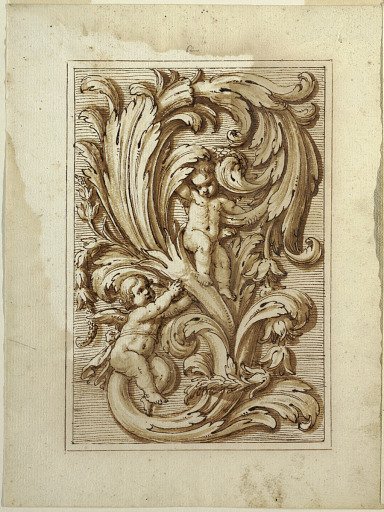 One of a set of projects for a title page and for the decoration of a vertical panel
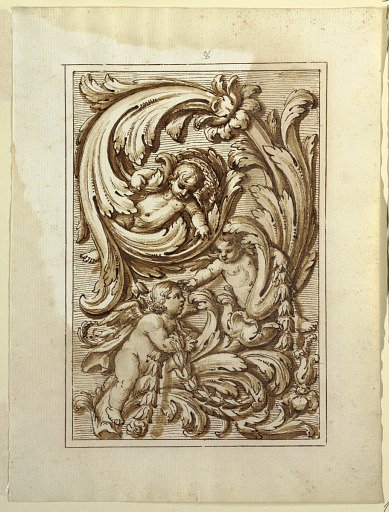 One of a set of projects for a title page and for the decoration of a vertical panel
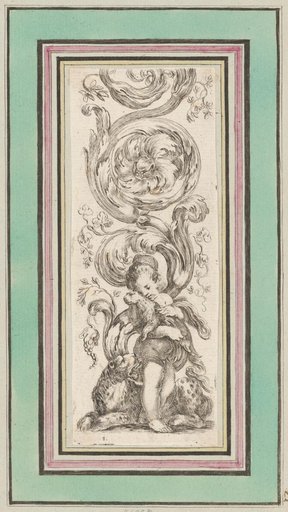 Ornament with a child and leopards
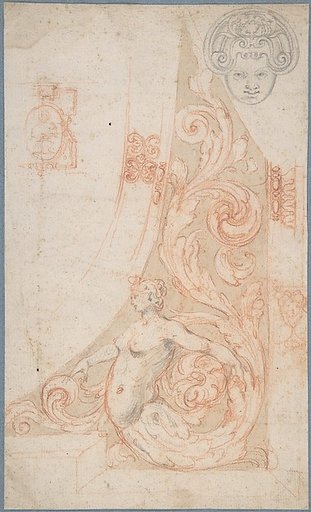 Frame Design with Antique Design, and other sketches
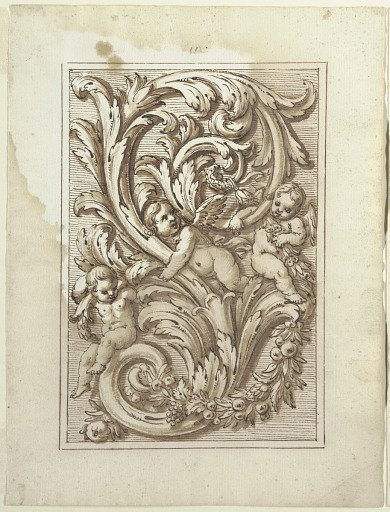 One of a set of projects for a title page and for the decoration of a vertical panel
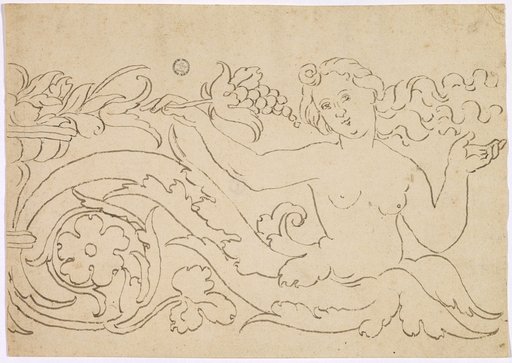 Ornamental Frieze with a Female Figure and Floral Spiral