CC0 · no rights reserved
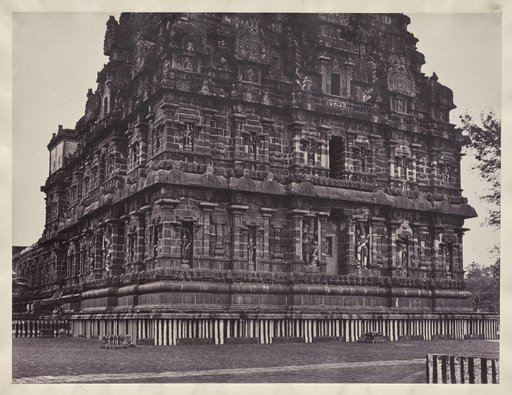
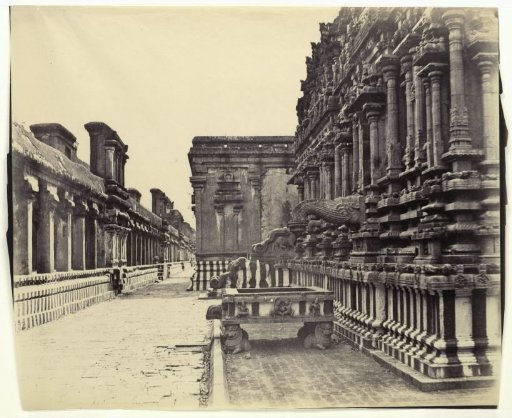
West and South Sides of the Vimana Walls, Great Temple (Brihadeshvara) at Tanjore (Thanjavur)
From the collection of Cleveland Museum of Art. Free to download, adapt and use — no permission needed.
About this work
The double-storied exterior base of one of the largest temples constructed and still standing on the Indian subcontinent is articulated with niches containing images of Hindu gods. Within these walls is an inner sanctum containing a monolithic linga (the phallic emblem marking the sacred presence of the god Shiva). Tripe used waxed paper instead of glass negatives, possibly because he was concerned about breakage and weight. When printing the photograph, he laid the negative on a paper treated with a light-sensitive emulsion of sodium chloride (table salt) and silver nitrate and exposed it to light, to create a “salt print.”
Cleveland Museum of Art’s own descriptionCredit lineWest and South Sides of the Vimana Walls, Great Temple (Brihadeshvara) at Tanjore (Thanjavur), 1858. Captain Linnaeus Tripe (British, 1822–1902). Albumenized salt print from a waxed paper negative; image: 27.4 x 36 cm (10 13/16 x 14 3/16 in.); paper: 27.4 x 36 cm (10 13/16 x 14 3/16 in.); mounted: 45.3 x 57.3 cm (17 13/16 x 22 9/16 in.). The Cleveland Museum of Art, Purchase from the J. H. Wade Fund, 2020.210
Similar works
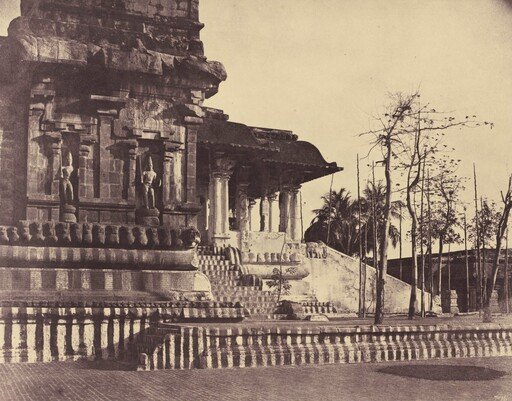 Tanjore: Great Pagoda, Entrance Looking Outwards
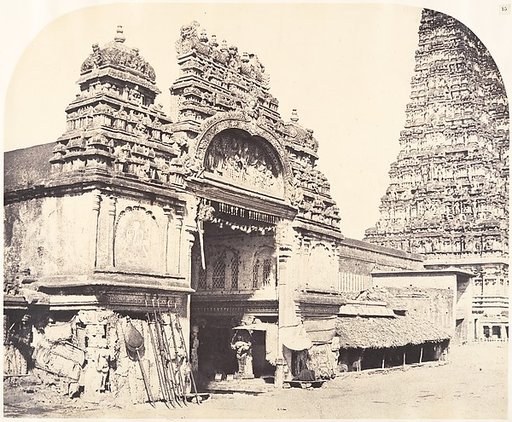 Entrance to the Temple of Minakshi in the Great Pagoda
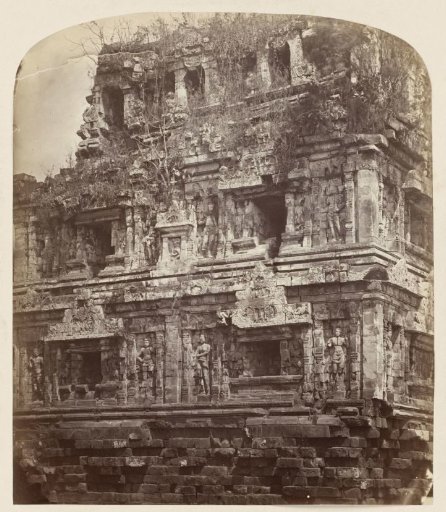 Candi Sari Monastery (Buddhist), side wall (probably northern), decorated with semi-divine beings, near Kalasan, Yogyakarta district, D.I. Yogyakarta province 9th century, Indonesia
 A consecrated cistern and gargoyle at the Subrahmanya Temple in Thanjavur, Tamil Nadu, India
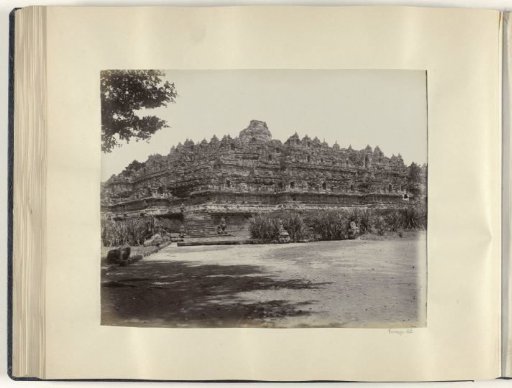 Borobudur on Java
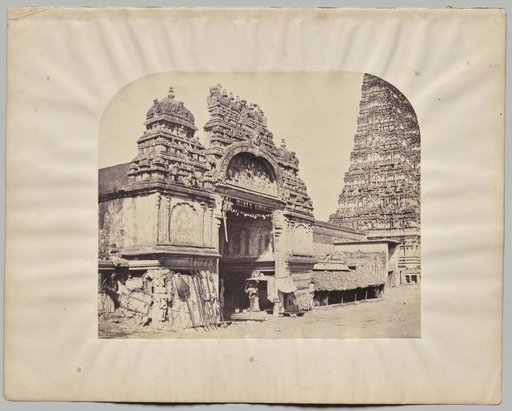 Entrance to the Minakshi Sundareshvara Temple, Madurai