CC0 · no rights reserved
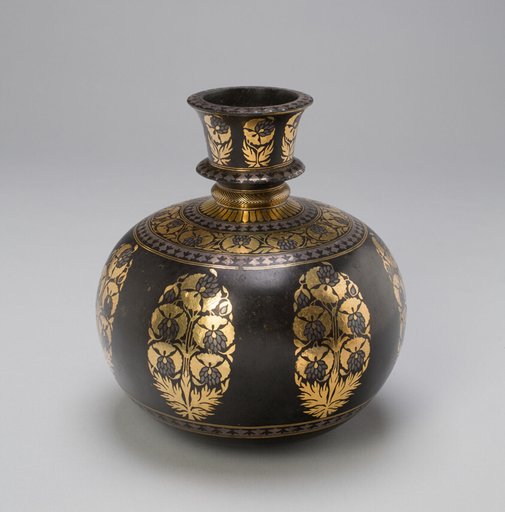
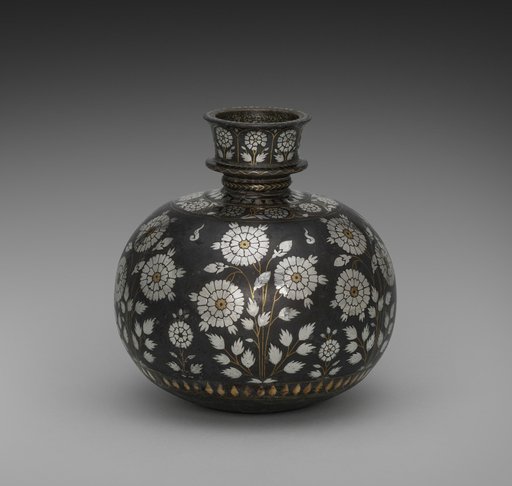
Bidri Hookah Bowl with Roses
From the collection of Cleveland Museum of Art. Free to download, adapt and use — no permission needed.
About this work
Hookah bowls were used for the enjoyment of tobacco or any other smoked substance during moments of relaxation. They were also aesthetic objects to be admired in elite gatherings of connoisseurs. The flowering rose bushes on this fine early example, made shortly after the introduction of tobacco-smoking in India, would have called to mind celebrated poetical works, such as the Gulistan (Rose Garden) of Sa'di (Persian, 1210–1291 or 1292).
Cleveland Museum of Art’s own descriptionCredit lineBidri Hookah Bowl with Roses, c. 1650s. Southwestern India, Deccan, Karnataka, Bidar. Zinc alloy with silver and brass inlay; diameter: 16.5 cm (6 1/2 in.); height: 18.5 cm (7 5/16 in.). The Cleveland Museum of Art, Severance and Greta Millikin Purchase Fund, 2020.207