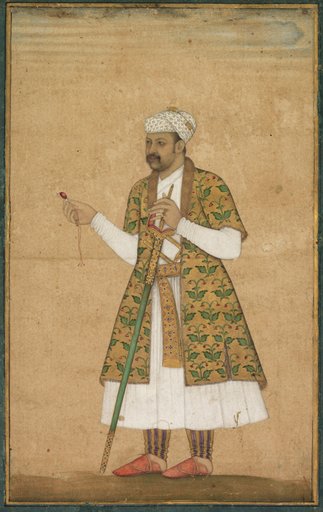
A Courtier, Possibly Khan Alam, Holding a Spinel and a Deccan Sword
From the collection of Cleveland Museum of Art. Free to download, adapt and use — no permission needed.
According to Akbar's court historian, the emperor ordered likenesses to be taken of the grandees of his realm. "An immense album was thus formed: those that have passed away have received a new life, and those who are still alive have immortality promised them." Akbar's son and successor, Jahangir (reigned 1605-27), continued the tradition of commissioning works of lifelike portraiture for inclusion in imperial albums. This courtier wears an opulent fur-trimmed, fringed velvet coat over his belted white tunic and striped pants-the typical Mughal dress derived from their roots among the nomadic horse-riding people of Central Asia. The artist has reveled in creating the soft textures of the facial hair, fur and fabrics. He holds a ruby-like gemstone called a spinel, which was prized among the Mughals for its talismanic properties of protection during battle.
Cleveland Museum of Art’s own descriptionSimilar works
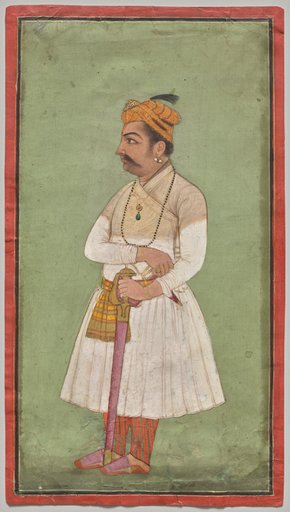 Raja Hari Sen of Mandi
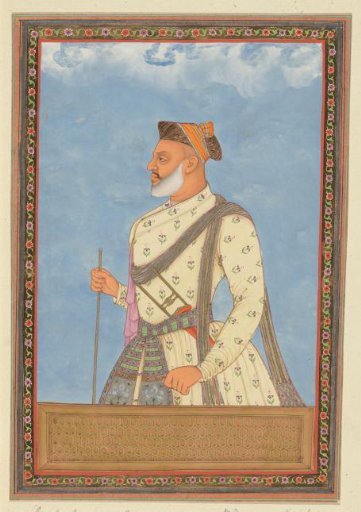 Portrait of Shah Mirza; during the reign of Sultan Abul Hasan he served as commander of the cavalry (sar-khayl) after Sayyid Muzaffar
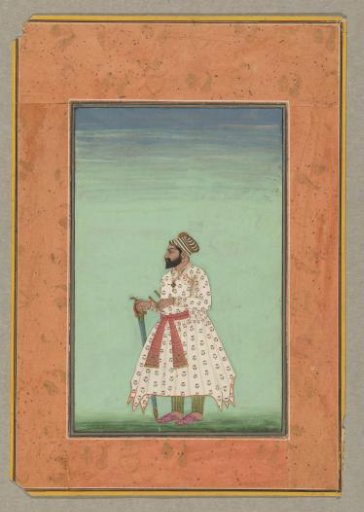 Portrait of a nobleman
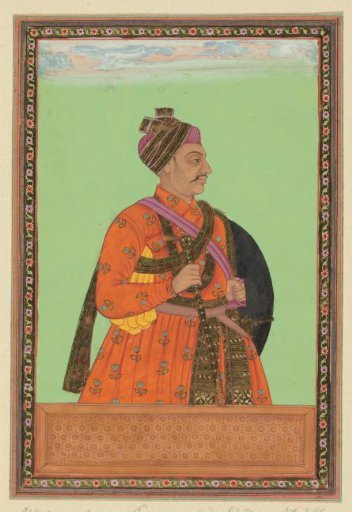 Portrait of Musa Khan, who was a page to Sultan Abdullah; after Neknam-Khan he served as army commander of Karnatak
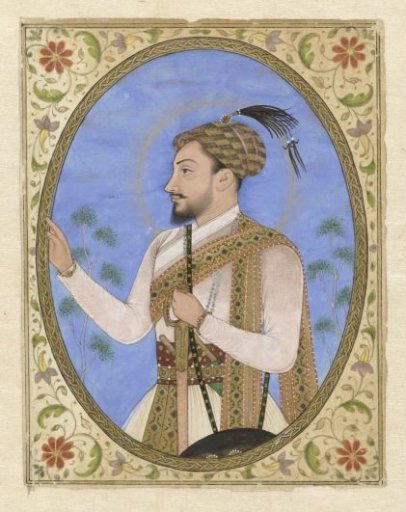 Sultan Mohammed Adil Shah
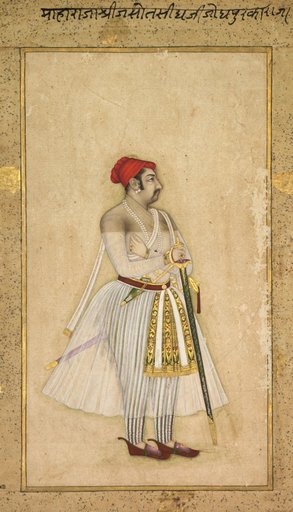 Jaswant Singh of Jodhpur (reigned 1635–1678)