CC0 · no rights reserved
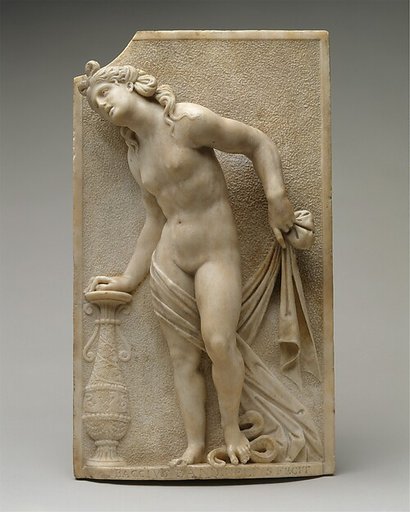
Dido
From the collection of Cleveland Museum of Art. Free to download, adapt and use — no permission needed.
About this work
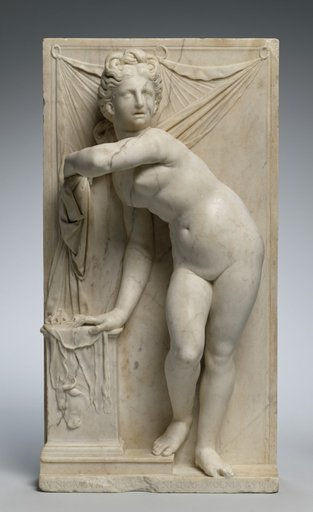
Artists customarily portrayed Dido as a forlorn lover abandoned by the Trojan hero, Aeneas, but here she is a conquering queen. Dido draws aside an oxhide curtain, a reference to the mythical founding of Carthage (in modern-day Tunisia, North Africa), when she was given an oxhide to demarcate granted land. By cutting it into thin strips she was able to encircle the future city. Dido was likely created for display in a studiolo , a place of study featuring refined works of art appreciated by humanist scholars and aficionados during the Renaissance.
Cleveland Museum of Art’s own descriptionCredit lineDido, c. 1525. Aurelio Lombardo (Italian, 1501–1563). Marble; overall: 50 x 26.5 x 14 cm (19 11/16 x 10 7/16 x 5 1/2 in.). The Cleveland Museum of Art, Mr. and Mrs. William H. Marlatt Fund, 2021.2